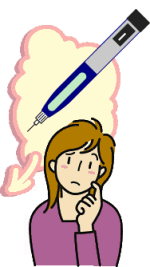
<?xml version="1.0" encoding="UTF-8"?>
<feed xmlns="http://www.w3.org/2005/Atom">
    <title>いま、1型糖尿病は／内潟 安子 先生</title>
    <link rel="alternate" type="text/html" href="https://www.dm-net.co.jp/ichigata/" />
    <link rel="self" type="application/atom+xml" href="https://www.dm-net.co.jp/ichigata/atom.xml" />
   <id>tag:www.dm-net.co.jp,2026:/ichigata//10</id>
    <link rel="service.post" type="application/atom+xml" href="https://www.dm-net.co.jp/mt/mt-atom.cgi/weblog/blog_id=10" title="いま、1型糖尿病は／内潟 安子 先生" />
    <updated>2026-04-01T02:07:50Z</updated>
    <subtitle>長年にわたり小児糖尿病・1型糖尿病の患者さんと向き合い、治療に尽力され、東京女子医科大学糖尿病センターにて第4代センター長を務められた内潟安子先生に、豊富な経験と知識に基づいたお話をしていただきます。</subtitle>
    <generator uri="http://www.sixapart.com/movabletype/">Movable Type  7.9.5</generator>
 

<entry>
    <title>いつも注射している部位に注目！</title>
    <link rel="alternate" type="text/html" href="https://www.dm-net.co.jp/ichigata/2009/07/049.php" />
    <link rel="service.edit" type="application/atom+xml" href="https://www.dm-net.co.jp/mt/mt-atom.cgi/weblog/blog_id=10/entry_id=8583" title="いつも注射している部位に注目！" />
    <id>tag:153.122.1.181,2009:/ichigata//10.8583</id>
    
    <published>2009-07-16T11:44:39Z</published>
    <updated>2012-03-02T05:52:19Z</updated>
    
    <summary> 今回のテーマは、以前にも少し書いたかもしれません。あらためて、テーマとして挙げ...</summary>
    <author>
        <name>Terahata</name>
        <uri>http://www.dm-net.co.jp/</uri>
    </author>
    
        <category term="49" />
    
        <category term="E049" />
    
    <content type="html" xml:lang="ja" xml:base="https://www.dm-net.co.jp/ichigata/">
        <![CDATA[<div class="img">
<img src="/ichigata/2009ima/200907-1.gif" border="0" />
</div>

今回のテーマは、以前にも少し書いたかもしれません。あらためて、テーマとして挙げて、書いてみます。

<div class="title3">どこに注射しているのだろうか</div>

毎日のこととなると、どこに注射したかも・・・。いつものところに決まっているじゃない。その通りです。毎日、数回の注射となると、決まりきったところに済ませてしまいます。<br />
　その決まりきったところ、というのが、お腹のおへその左右のあたりか、太もものあたりか、左の腕あたりかと思います。<p>

その部位が膨らんでいないか、手でなぞってみてください。昨年か1昨年でしたか、有名な医学雑誌のコラム的記事に、お腹のCT写真が載っていて、おへその左右に同じような皮下の膨らみが映っていました。「インスリンボール」などといった名称がついていましたが、もとを正せば、インスリン注射をその部位に集中して起こなった結果であります。<p>

この膨らんだ部位に注射すると痛くないのですね。だから、またその部位に繰り返して注射してしまう・・・。

<div class="title3">どうして同じ場所に注射してはいけないのか</div>

皮下組織のふくらみは脂肪組織と繊維組織だと考えられますが、その部位に注射していても、皮下から毛細血管への吸収が、他の部位に注射した場合と比べて遅れてしまうことは容易に想像がつきます。<p>

インスリンの吸収が悪いと、どうなるのでしょう。このインスリンが食前のインスリンだったら、食後血糖値のほうが先に上がってきて、そのうち注射したインスリンが血中をまわり血糖を下げるように作用し始め、食後3時間、4時間経過したときに異常なくらいにインスリンの効きがよくなって血糖値が低くなってしまう、このようなことが起こりやすくなるわけですね。<p>

最近、注射部位を変更して、インスリン注射量が3分の2くらいに減った方がいました。

<dl><dt>
<b>　　注射した部位から漏れることも</b>
<dd>
　また、同じ部位に繰り返し注射していると、その部位の皮膚が硬くなってきます。<br />
　そうすると、よく起こってくるのが、注射して5、ないし10を数えて針を抜いても、針を抜いたときに、皮膚の中から注射したはずのインスリンの液がもどってくるのです。漏れてくるという表現がいいですね。1、2単位のときもありますが、多く注射している方では、もっと漏れてきます。
</dl>

<dl><dt>
<b>　　アルコール綿が吸い取る</b>
<dd>
　針を抜いたあとにアルコール綿を当てる習慣の方ですと、毛細管現象により綿に吸い取られると、英国の患者教育用の本に記載されていました（どちらにしても、針を抜いたあとは、アルコール綿をその部位に当てたり、押し付けたり、する必要はないのですね）。<br />
　このようなことから、20単位注射したいと20にダイアルを合わせて注射しても、皮下には20単位のインスリンが入っていないようなことが起こります。当然、血糖値は思うほど下がらないことになります。20単位が少ないのか、と思い、次に22単位を注射してみる。今度は皮下からの漏れがなかったのでよかった、と思っていたら、その後思った以上に血糖値が下がってしまいった、ということが起こりうることになります。<br />
</dl>

<dl><dt>
<b>　　適切な注射量はいくつなのか？</b>
<dd>
　漏れたりしていることに気づかず、なぜ下がらないのだろうとフシギに思ったり、多くしたら低血糖になったり、自分の適切なインスリン量が、わからなくなってしまい、そのうち、なにがなんだか、測定した値にまで、信用できなくなってきてしまう・・・。<br />
　このようなことはよくあることです。いらいらしてきますし、なにより、自分の起こなっていることに不安を感じてきてしまいますし、医師の言うことも信用ならないし・・・となってきます。
</dl>

<div class="title3">皮下からインスリンが漏れるのなら</div>

長年インスリン注射している方は、注射がうてるところはたいてい注射してしまった、と言われるでしょう。どこに注射しても、少し漏れてくる・・・といわれるかもしれません。<br />
　こんなときはどうしましょう。漏れ量をあらかじめ計算して多目に注射する、ということも一案ですが、ちょっとこわいですね。<p>

では、注射する部位の皮膚をちょっと上か、下にずらしてみて、それからその部位に注射してみましょう。注射が終了して抜いたとき、皮膚がもとにもどるので、注射した入り口と注射した皮下との間に、少しばかりの“断絶”が起こるので、これで、漏れを防ぐことができます。<br />
　このアイデアは私のアイデアではありません。先ほどの英国糖尿病協会のインスリン注射マニュアルに、大昔、記載されてありました。さすが、英国糖尿病協会！と思いました。<br>
　その後、このアイデアを、外来でお話して実行してもらっておりますが、どうも、よろしいようです。<br />
<p>
　ちょっとしたコツですね。本日の大事なことは、インスリンの注射部位。<br />
　同じところにいつも注射しないこと。そして、注射部位を大きくローテートさせてください。]]>
        <![CDATA[<table border="0"><tbody><tr><td valign="top"></td><td class="moji5"><b>49 Pay Attention to Your Usual Injection Site!</b></td></tr></tbody></table>
<p>

<div class="img">
<img src="/ichigata/2009ima/200907-1.gif" border="0" />
</div>

I may have touched on this topic before, but I would like to address this topic once again.<br>
<p>
<div class="title3">Where are you injecting?</div>
"As I inject insulin every day, I don't even remember exactly where…." "Of course it's the same usual site." That is right. When it comes to daily multiple injections, patients tend to inject the same usual area.<br>
And that usual area is probably an area next to the naval, thighs or left upper arm.<br>
Please trace these sites with your finger to see if they are swelling. Last year or the year before, I saw a column in a famous medical magazine with a CT scan photo of the stomach showing swell under the skin on the right and left side of the naval. It was named "insulin ball". It was caused by injecting insulin at the same site over and over.<br>
It does not hurt if injected in this swelling area. That is why patients fall into the habit of injecting in the same spot repeatedly.
<p>
<div class="title3">Why is it not good to keep injecting the same site?</div>
The swell under the skin is thought to be fat tissue and fiber tissue. It is not difficult to figure out that injecting such site will lead to delay in insulin absorption from under the skin to capillary blood vessel compared to when injecting other sites.<br>
What will happen if insulin dose not get absorbed well? In the case of pre-meal insulin, postprandial blood glucose level will start rising before the injected insulin starts working and the insulin will begin to work really well three to four hours after the meal, which is likely to lower glucose level.<br>
Recently, I had a patient who was able to reduce insulin dosage by one-third by changing injection sites.
<p>
<b>Insulin may leak from injection site</b><br>
When you inject insulin into the same site over and over, the skin of the area becomes indurated. Then, what happens often is that injected insulin flows back when removing the needle even if you count to five or ten after the injection. "Leaking out" may be a more appropriate phrase to describe. It may be one or two units of insulin that leak from the skin, but it is more in the case of those injecting a larger dosage.
<p>
<b>Absorbed by alcohol swab</b><br>
There are patients who press an alcohol swab against the injection site after removing the needle. I have read in a British patient education book that insulin gets absorbed onto the cotton by capillary action. (In any case, it is not necessary to hold an alcohol swab on or press it against the site after taking out the needle.)<br>
Because of these reasons, even if you turn the dial to 20 units and inject, 20 units of insulin may not get fully injected under the skin. Naturally, your blood glucose level would not come down as much as expected. If you face this situation, you may think 20 units are not enough and inject 22 units the next time. Finding no insulin leaking from the skin, you may feel relieved. However, your blood glucose level could become lower than expected after that. Cases like this could happen.
<p>
<b>What is the appropriate dosage?</b><br>
If you do not realize leakage of insulin, you may wonder why your blood glucose does not come down. When you increase dosage, you become hypoglycemic. <br>
Eventually, you start losing your grasp on appropriate insulin dosage and become skeptical even about measured blood glucose values….<br>
This is common. You could get frustrated, start feeling anxious about what you are doing, begin to not trust what your doctor tells you….
<p>
<div class="title3">If insulin leaks from the skin</div>
Those of you on insulin for many years may say that you have used almost all the sites you could use for injection and that some insulin leaks no matter where you inject.<br>
What could be done? One idea is to estimate the amount of insulin to leak and inject a little larger dosage. This, however, is a little frightening. <br>
You could slide the skin up or down from the injection site and then inject. When removing the needle, the flesh you have pulled away will re-cover the injection site creating a little "break" between where the needle was inserted in the skin and under the skin, which works to prevent leakage of insulin.<br>
This is not my idea. It was written in an insulin injection manual published by the British Diabetic Association many years ago. I was really impressed with the British Diabetic Association! Since then, I have been telling my patients at our outpatient clinic to use this technique. It does seem to work well.
<p>
Just a little tip makes difference. The point is not to always inject into the same site and rotate injection site across various areas. <br>]]>
    </content>
</entry>

<entry>
    <title>飲みものなら胃に残らないし・・・</title>
    <link rel="alternate" type="text/html" href="https://www.dm-net.co.jp/ichigata/2009/09/050.php" />
    <link rel="service.edit" type="application/atom+xml" href="https://www.dm-net.co.jp/mt/mt-atom.cgi/weblog/blog_id=10/entry_id=9117" title="飲みものなら胃に残らないし・・・" />
    <id>tag:www.dm-net.co.jp,2009:/ichigata//10.9117</id>
    
    <published>2009-09-14T01:26:55Z</published>
    <updated>2012-03-02T05:15:53Z</updated>
    
    <summary> 夏になると、サラッとしたものが食べたくなったり、食欲がすこし落ちたりと、食べる...</summary>
    <author>
        <name>Terahata</name>
        <uri>http://www.dm-net.co.jp/</uri>
    </author>
    
        <category term="50" />
    
        <category term="E050" />
    
    <content type="html" xml:lang="ja" xml:base="https://www.dm-net.co.jp/ichigata/">
        <![CDATA[<div class="img"><img src="/ichigata/2009ima/200908-1.jpg" border="0"></div>
夏になると、サラッとしたものが食べたくなったり、食欲がすこし落ちたりと、食べるものがすこし変化することがあります。<br />

　食欲とか、食べるものの変化は、誰にもあることで、自然な人間の営みのひとつといえましょう。

<div class="title3">飲みものなら胃に残らないし</div>

暑いときは、冷たいもの、喉越しのいいものをスッと入れたいと思ってしまいますね。<br />
　昼食がいつものように食べられなかったから、夕食までにお腹が空いてきてしまう。だからといっておにぎりなどもスッとは入らないし、それなら、ジュースなどのソフトドリンクで、低血糖<nobr>予防</nobr>の意味も兼ねて飲もうと考えてしまいます。<p>

飲みものは飲んでも胃にあまり溜まらないように感じてしまいます。ごはんなど固形物が入ると胃が重い感じがする時候だからなおのこと、飲みもののほうが胃に負担がなく、スッと胃から腸に流れていってしまうから安心という気持ちになってしまいます。

<div class="title3">HbA1cがよくなっているつもりが</div>

糖尿病センターでは、来院されると診察室に入る前に採血して、血糖とHbA1cの結果が出てから診察室に呼ばれる、という流れになっています（現在、多くの医療機関がそのような流れになっていると思います）。
診察室に入られると、<br />
　「先生、今回はHbA1cが下がっているでしょう？」と開口一番に聞かれます。<br />
　「何かありました？何かいいことでも？？」<br />
　「いいえ、あまり食べられなかったものですから」<br />
　そこで、HbA1cを見ます。あまり下がっていないのですね。同じか、すこし上がっていたりすることも。<br />
　「どうして下がっていないのかな。あまり食べられなかったから。体重もすこし減ったようにも思うのですが」<br />
　体重を測定すると、たしかに増えていませんね。<br />
　「食べられなかったから、インスリンをすこし減らしていたとか？」<br />
　「いいえ、インスリンは減らしていません。低血糖を起こしてくればすこし下げようかなと思っていたのですが大丈夫でしたので」<br />
　さて、どうしたのでしょう。あまり食べられなかったので、HbA1cがよくなっていると思って来院されたら、HbA1cは下がっていない。<br />
　HbA1cがまだ高い方で、過食ぎみの方が食べるものを節制するとHbA1cが下がります。この理屈でいけば、HbA1cが下がってもいいわけですね。<p>

よくよく話しをお聞きしますと、昼に思ったほど食べられなかったから、食事と食事の間に低血糖にならないように飲みものをとっていたことがわかりました。この飲みものが、水とかお茶ではなく、ソフトドリンクのたぐい。<br />
　血糖値が上がってもすぐ下がるから大丈夫という気持ちもわかるのですが、意外とHbA1cは上がってしまいます。量の問題もあるでしょうが。

<div class="title3">夏場の注意として</div>

　このようなことは、よくあります。HbA1cがよくなっていると感じる自分の気持ちと結果が一致しない。変な感じかもしれませんが。]]>
        <![CDATA[<b> 50 Since drink should not stay in the stomach….</b><p>
<p>
<p>
<div class="img"><img src="/ichigata/2009ima/200908-1.jpg" border="0"></div>
During summer, we tend to want non-fatty food, have lower appetite or change what to eat. <br>
We all experience changes in appetite or what to eat, and thus it could be considered one of natural human behaviors.<p>

As drink should not stay in the stomach<br>
When it is hot, we naturally want to eat something cold or something that goes down the throat well.<br>
If you could not eat as much lunch as usual, you may get hungry before dinner time. But something like a rice ball would not go down the throat smoothly, and then you may think of having soft drink such as juice thinking it would also work to prevent hypoglycemia.<br>
You may feel that drink does not stay very much in the stomach. You tend to worry less believing that drinks have fewer burdens on the stomach and flow quickly from the stomach to the intestines, especially in summer when eating solids like rice make your stomach feel heavy.<p>

HbA1c should be improving<br>
When patients come to our Diabetes Center, they first have their blood taken to measure blood glucose and HbA1c before seeing us. (I believe this is a typical flow in most medical institutions today.) When they come into the consultation room, the first thing they ask is "Doctor, my HbA1c has come down, hasn't it?"<br>
"Did something happen? Something good?"<br>
"No, I just haven' been able to eat much."<br>
I check the patient's HbA1c, but it has not come down much. It is actually about the same or even higher than before in some cases.<br>
"I wonder why it hasn't gone down even though I haven't been able to eat much. I think I also lost some weight." In fact, the patient's weight hasn't increased.<br>
"As you couldn't eat much, you decreased the amount of insulin a little?"<br>
"No, I didn't. I was thinking about reducing the amount if I had hypoglycemia, but I was fine."<p>
So what happened? The patient expected his HbA1c to have improved because he hadn't been able to eat much, but HbA1c hadn't gone down. When those with still rather high HbA1c who tend to overeat cut down the amount of food they eat, their HbA1c drops. According to this logic, HbA1c in the above patient's case could come down as well.<p>
When I asked the patient in details, I came to learn that he had had drinks between meals, not water or tea but soft drinks aiming to avoid hypoglycemia when he could not eat much lunch. <br>
I understand that patients believe blood glucose will dome down fast even if it goes up once by taking fluids. However, unexpectedly, HbA1c does rise even by taking fluids though it also depends on the amount taken.<p>

Something to think about in summer<br>
A case like the above where your impression that HbA1c is improving does not agree with the results is very common through you may find it strange.<p>]]>
    </content>
</entry>

<entry>
    <title>髪の毛が抜けるんです</title>
    <link rel="alternate" type="text/html" href="https://www.dm-net.co.jp/ichigata/2009/12/051.php" />
    <link rel="service.edit" type="application/atom+xml" href="https://www.dm-net.co.jp/mt/mt-atom.cgi/weblog/blog_id=10/entry_id=9538" title="髪の毛が抜けるんです" />
    <id>tag:www.dm-net.co.jp,2009:/ichigata//10.9538</id>
    
    <published>2009-12-14T04:52:32Z</published>
    <updated>2012-03-02T04:54:16Z</updated>
    
    <summary> 当センターには、発症してすぐに当センターで初診され、その後も引きつづき通院され...</summary>
    <author>
        <name>Terahata</name>
        <uri>http://www.dm-net.co.jp/</uri>
    </author>
    
        <category term="51" />
    
        <category term="E051" />
    
    <content type="html" xml:lang="ja" xml:base="https://www.dm-net.co.jp/ichigata/">
        <![CDATA[<div class="img">
<img src="/ichigata/2009ima/200912-1.jpg" border="0" />
</div>

当センターには、発症してすぐに当センターで初診され、その後も引きつづき通院される方とともに、発症したときは近くの病院で、その後は仕事先に近い当センターに通院したい、という方が受診されています。
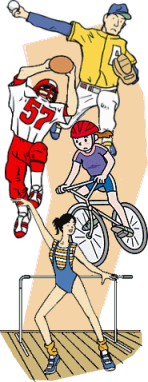
<div class="title3">退院後から髪の毛が抜けやすく・・・</div>

1型糖尿病の女性が糖尿病を発症して近くの病院に入院し、退院後、当センターに初診されたとします。
<blockquote>
「先生、髪の毛がごそっと抜けるんのです。大丈夫でしょうか？」
</blockquote>
たいてい、診察の最後になってお聞きになられます。心配そうに、お聞きになられます。もちろん、全員、女性です。
<p />
女性にとって、髪の毛は、大昔から、命と同じなのですね。命と同じで、とても大切なものなのです。ごそっと抜けるようになった、ブラシに長いものが付いてくる、髪を洗っていると、長いものが何本も抜けていく・・・、それも毎日・・・。これを見てびっくりされるのは、至極当然なことです。
<p />
インスリン注射を欠かせなくいことになった、ことに対して、ある意味、ショックであったろうと思いますが、退院後は、それはそれで仕方のないことと自分の中なかで理解はできるようになってきてはいても、そのころになって、ごそっと髪の毛が抜け始めるわけですから、気持ちが悪い、また別の病気になったのか、私の体はどうかなったのか、と疑心暗鬼（疑診案擬）になって、不安になって、自分に対して自信が持てなくなり始めるのは、とても、当然なことでしょう。
<p />
　たいてい、微笑んで、私は言います。
<blockquote>
「大丈夫ですよ、ちゃんと生えてきますからね」
</blockquote>
　心配ないことには、心配ないのだと医療者がきちんとお話する、これはとても、大事なことですね。
<blockquote>
「6ヵ月くらいしたら、もとに戻っていますからね」
</blockquote>

<div class="title3">1型糖尿病になったということは体にとっても大事だったのです</div>

1型糖尿病以外でも他の大きな病気にかかると、このように髪の毛が抜けやすくなることがは、よくあります。高熱が長引いたとか、重症の薬疹になったとか、1型糖尿病も高血糖状態が長く続いていたとか。たいへんな時期があって、そこをから体がくぐり抜けてきたときに、よく起こります。
<p />
1型糖尿病を例にとれば、発症したときには1個1個の体の細胞も、重症の糖分欠乏状態であったあることが想像されます。欠乏状態で死に絶える細胞もあるでしょう。我々の体の細胞は、毎日、古くなった細胞は死んで新しい細胞に置き換わることを行っています。お風呂に入ると垢がでますが、これは古くなった皮膚の細胞ですね。かぜをひいて直りかけのころの黄色い鼻漏もそうですね。
<p />
1型糖尿病が発症したとき、髪の毛を作る細胞、つまり毛根細胞が障害を受け、死に絶えたために、、多くの髪の毛が一度にごそっと抜けてしまうことが起きた、と考えられます。これから、新しい毛根細胞に置き換わっていくわけですね。
<p />
インスリン治療が開始されて血糖値が落ち着いてくると、新しい毛根細胞が細胞分裂してできあがってきますので、新しい髪の毛を作り始めます。よって、しばらくすれば、もとに戻るというわけです。

<div class="title3">他にどんなことが起きてきますか？</div>

よくあるのは、女性で、これまできちんと来ていた生理がなくなることです。これも、インスリン治療開始後に血糖値が落ち着いてくれば、たいていは戻ってきます。が、たまに、戻ってきにくいことがあります。
<p />
私は6ヵ月くらい様子をみます。6ヵ月くらい様子をみていても、生理が戻ってこなければ、婦人科の先生にご紹介します。婦人科的治療が始まると、生理がまた再開されます。体が元の生理の周期を思い出したような、そんな感じですね。
<p />
1型糖尿病発症する前から、きちんと生理がきていなかった方は、生理がきちんと来るまでに、いろいろ婦人科的治療が必要になることもあります。]]>
        <![CDATA[<b>51 Hair falls out
</b><p>
</p><div class="img">
<img src="/ichigata/2009ima/200912-1.jpg" border="0">
</div>
At our Diabetes Center, we have patients who visited us right after the onset of diabetes and have been coming to the center continuously as well as patients who went to hospitals near where they live when they developed diabetes and then came to our center as they work nearby.<p>

Started losing hair easily after discharge from a hospital.
Let us consider a case of a female patient who developed type 1 diabetes, was hospitalized near her house and was discharged from the hospital, and then came to our center for the first time.<br>
"Doctor, my hair has been falling out in a bunch. Is there something wrong with me?"<br>

In most cases, they ask me this question at the very end, looking worried. Needless to say, I am talking about female patients.<br>
For a woman, hair is as precious as her life, and that has been so since forever. One day, she finds a whole bunch of hair in her brush, or sees many strands of long hair falling out while washing her hair. And this starts happening every day…. They have every right to be surprised about this.</p><p>
These patients require insulin injections. Initially, they must have been shocked in some ways by that fact, but after released from hospital, they were coming to understand that it could not be helped. And that is around when they find hair falling out. They may feel eerie, start to have a gnawing suspicion that they could have other disease or something happened to them, or become worried and begin to lose confidence in themselves. Their reactions make perfect sense.<br>
In such cases, I usually tell them with a smile.<br>
"Please don't worry. You hair will grow again for sure. It will become normal again in about six months."</p><p>

It is very important for us, healthcare professionals to clearly tell patients not to worry when what they are worried about is of no matter.<br>
Having developed type 1 diabetes was a big deal for your body also. <br>
Hair loss can be often observed not only in type 1 diabetes but also in other severe illness, for example, prolonged high fever, serious drug eruption, and prolonged high blood pressure in the case of type 1 diabetes. Hair loss is often experienced when your body goes through and comes out of such condition.<br>

Taking type 1 diabetes as an example, it can be assured that each body cell was also in the state of severe glucose deficiency at the onset of diabetes. Some body cells would die due to glucose deficiency. Within our bodies, old cells die and are replaced with new ones every day. When you scrub yourself while taking a bath, dirt comes off. They are old skin cells. So is yellow nasal discharge that you have when you are recovering from a cold. <p>
With the onset of type 1 diabetes, hair root cells that produce hair are damaged and die that likely lead to hair falling out in a bunch.<br>
Those old cells are going to be replaced with new hair root cells.<br>
Once blood glucose levels become stable with insulin treatment, new hair root cells are generated by cell division producing new hair. Therefore, your hair should grow again and become normal in a while.</p><p>

What other things are happening?
Another thing that often happens to female patients is that they stop getting a period they used to have regularly. This too will become normal in most cases once blood glucose levels become stable with insulin treatment. However, in some cases, patients have a harder time getting a period back.<br>
I usually wait and see for six months or so. If my patients do not get a period back in about six months, I refer them to gynecologists.<br>
Once they start receiving gynecological treatment, they get a period back as if their bodies were reminded of original period cycle.<br>
For those who did not have a period regularly even before developing type 1 diabetes, various gynecological treatment may be needed before they get a regular period.</p><p>
]]>
    </content>
</entry>

<entry>
    <title>もう知っていたかもしれませんね</title>
    <link rel="alternate" type="text/html" href="https://www.dm-net.co.jp/ichigata/2010/01/052.php" />
    <link rel="service.edit" type="application/atom+xml" href="https://www.dm-net.co.jp/mt/mt-atom.cgi/weblog/blog_id=10/entry_id=9606" title="もう知っていたかもしれませんね" />
    <id>tag:www.dm-net.co.jp,2010:/ichigata//10.9606</id>
    
    <published>2010-01-08T06:57:50Z</published>
    <updated>2012-03-02T04:49:26Z</updated>
    
    <summary> 私は、ついぞ、知りませんでした。2008年のオリンピックのウエイトリフティング...</summary>
    <author>
        <name>Terahata</name>
        <uri>http://www.dm-net.co.jp/</uri>
    </author>
    
        <category term="52" />
    
        <category term="E052" />
    
    <content type="html" xml:lang="ja" xml:base="https://www.dm-net.co.jp/ichigata/">
        <![CDATA[<div class="img">
<img src="/ichigata/2010ima/201001-1.gif" border="0" />
</div>

私は、ついぞ、知りませんでした。2008年のオリンピックのウエイトリフティングで優勝して金メダルの栄誉に浴したマチアス シュタイナー選手は、1型糖尿病であったのですね。ヨーロッパ糖尿病学会会場にきて、彼が来るというチラシがあり、はじめて、知りました。
<p />
彼はオーストリアで育ちましたが現在はドイツ人です。学会に参加していたドイツの糖尿病教育ナースが言うには、ドイツでは、自分が1型であることをすすんで話すことはないそうです。どちらかというと、隠しておくことが多いと。そういった環境の中で、彼が「自分が1型糖尿病である」と世間に公表したことはすばらしい、と彼女は言っていまし<nobr>た。</nobr>
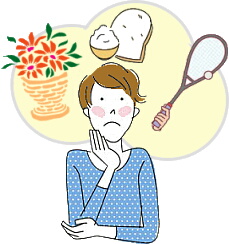
<p />
もちろん、金メダルをとったから、言うことができたともいえます。しかし、逆に、金メダルをとる前から、彼は1型糖尿病なのだ、ということがわかると、なんだか病気を持ってがんばっている人なのだと、特にマスコミなどがそのことばかりを取材してしまって、本来の彼の実力であるウエイトリフティング界で強剛と競っていることから離れてしまう、このことを嫌っていたのかもしれません。ウエイトリフティングのことで取材を受けることだったら、彼はいつでもウェルカムと思います。
<p />
阪神タイガースの岩田投手もそうですね。2008年の成績はすばらしいものでした。前回のワールドベースボールクラシック（WBC）の、日本代表選手の1人としても選出されて、日本がWBCで優勝したことはいまだ記憶に新しいところです。彼の雄姿は、みなさんのクリニックにポスターとして貼られていることでしょう。ときどき、テレビでも彼が投げてるところが映りますが、真剣そのものですね。妥協を許さない顔で<nobr>す。</nobr>
<p />
彼も糖尿病のみなさんへのエールをおくることには、いささかもやぶさかではない、なにかのイベントにも、たぶんオフになれば時間さえ許せば喜んで応じる気持ちを十分持っていることでしょ<nobr>う。</nobr>
<p />
当方の外来にも、1型糖尿病ではあるが運動選手で日本代表の1人としてがんばっている若い方や、県大会でいつも優勝するような運動大好きの小中学生がおります。とても、さわやかです。こだわりがない。
<p />
エアロビクスの大村詠一クン（もうクンではありませんが）も、数年前にお会いしたことがありますが、さわやかですね。
<p />
ウエイトリフティング、野球のピッチャー、エアロビクス、それらが好きだから、そして、どうもそこに自分の才能があるらしいと、たぶん気づいて邁進しているだけ、ということでしょう。そこに、たまたま、1型糖尿病があったというだけ。
<p />
いい成績を大会で残すために、その一瞬のパフォーマンスに賭けるために、日々努力しています。高血糖だと良いパフォーマンスができない、からだのキレが悪い、と言っていました。なるほどと思いました。
<p />
彼らの血糖コントロールの仕方ですか？　これは、それぞれ、いろいろな場面に遭遇してから経験的に学びとってくる、といったほうがいいでしょう。うまくいかないときは相談に乗りますが、基本的には自分でやり方を見出していっています。]]>
        <![CDATA[<b>
52 You May Have Known Already
</b><p></p><p>

<div class="img">
<img src="/ichigata/2010ima/201001-1.gif" border="0" />
</div>
I did not know at all that Mr. Matthias Steiner who won the gold medal in weight lifting at the 2008 Beijing Olympics Games has type 1 diabetes. I learned about the fact for the first time when I went to the Annual Meeting of the European Association for the Study of Diabetes and saw a flier that said he was joining the meeting. <p>
He grew up in Austria and is now a German. A German nurse specialized in diabetes education attending the annual meeting told me that people in Germany would not tell others willingly if they have type 1 diabetes and would often hide it. The nurse said it was wonderful that he announced to the public that "he has type 1 diabetes" in such a cultural environment. <p>
Of course, he may have been able to make it public because he won the gold medal. However, if people learn before the Olympics that he has type 1 diabetes, they, especially the media may focus too much on that part of the story instead of covering his true weight lifting ability and competing against leading weightlifters. That may be what he would not have liked. I am sure he would be happy to be interviewed at any time if it was about weight lifting. <p>

Mr. Iwata, pitcher of Hanshin Tigers also has diabetes. He achieved wonderful results in 2008. He was also selected as a member of the national team for the last World Baseball Classic (WBC), and the Japan team's victory at WBC is still fresh in out minds. You probably have seen his brave figure on a poster stuck on the wall of your clinic. I sometimes see him pitching on TV. He really has earnest eyes showing that he is a man of no compromise.<br> 
He probably has no reluctance to send cheers to diabetic patients and would be more than happy to support some kind of event for such patients during baseball off-season if time allows. <p>
Our outpatient clinic also has young type 1 diabetes patients including national team athletes and grade and high schoolers who regularly win on prefectural tournaments. They are all fine, laid-back young people. <p>
Some years ago, I met Mr. Eiichi Omura, aerobics performer. He too is such a fine young man. <p>
They simply love weight lifting, baseball or aerobics and have come to realize that they seem to have a talent in such sport and have been working single-mindedly on the sport. And they merely happened to have type 1 diabetes. <p>
They are working day in, day out in order to accomplish good results in games/tournaments and to instantly bring out their best. They have told me that they cannot perform well and lack sharpness in their movements when they are hyperglycemic. I was convinced when I heard that. <p>
You wonder how they control their blood glucose? It varies. Each of them has encountered various situations and has come to learn how to control it based on their experience. I would give advice when they have a difficult time managing their blood glucose, but I basically have them find their own way to control it. <p>]]>
    </content>
</entry>

<entry>
    <title>高頻度におこるか、低頻度におこるか</title>
    <link rel="alternate" type="text/html" href="https://www.dm-net.co.jp/ichigata/2010/03/053.php" />
    <link rel="service.edit" type="application/atom+xml" href="https://www.dm-net.co.jp/mt/mt-atom.cgi/weblog/blog_id=10/entry_id=9921" title="高頻度におこるか、低頻度におこるか" />
    <id>tag:www.dm-net.co.jp,2010:/ichigata//10.9921</id>
    
    <published>2010-03-31T02:43:16Z</published>
    <updated>2012-03-02T03:29:31Z</updated>
    
    <summary> 「低血糖をおこしたい」わけではありませんが、例えば午前中にテニスをして昼食時間...</summary>
    <author>
        <name>Terahata</name>
        <uri>http://www.dm-net.co.jp/</uri>
    </author>
    
        <category term="53" />
    
        <category term="E053" />
    
    <content type="html" xml:lang="ja" xml:base="https://www.dm-net.co.jp/ichigata/">
        <![CDATA[<div class="img">
<img src="/ichigata/2010ima/201004-1.jpg" border="0" />
</div>

「低血糖をおこしたい」わけではありませんが、例えば午前中にテニスをして昼食時間が遅くなり、急いで昼食をとって、午後久しぶりに趣味の陶芸に没頭して楽しんでいたら、午後5時ごろに昏睡になったみたいで、気がついたら病院だった、こんなことがおこりえます。

<div class="title3">原因はいろいろあります</div>

　上記の場合、
<ol>
<li>いつもはやらないテニスを午前中にやって昼食が遅くなったことから、昼食前の血糖がかなり下がっていたかもしれない、</li>
<li>早く食事を済ませたかったので昼食の量（特に炭水化物）がいつもより少なかったかもしれない、</li>
<li>午後はお楽しみの陶芸を一心不乱にやっていたので低くなっていたのに気付かなかったかもしれない、</li>
</ol>
などが主な理由として考えられます。今回の場合は、この3つの原因が重なったといえるでしょう。

<div class="title3">低血糖になったことから得ること</div>

はからずも低血糖になってしまった、これはちょっとまずかったかもしれませんが、『どうして低血糖になってしまったのか』、この分析をかならずやりましょう。なぜなら、低血糖になったのには、低血糖になる原因があるからです。<p>

『原因がなくて低血糖になる』ことはけっしてありません。はからずも『低血糖になった』ことは、なぜ低血糖をおこしたかを考える良い機会なのですね。

<div class="title3">低血糖や高血糖の原因を高頻度のものから考える</div>

原因を考えようとしても、いろいろあるからわからない、という方も多いです。しかし、よくよく観察してみれば、「そういえば私の場合、こんなことがあると低血糖になりやすいとか、こんなものを食べると高血糖になりやすい」など、おおまかにわかっているのではないでしょうか。<br>
　ただ、「いつもそうではない」という理由で、「はっきりと主治医に言えないのです」ということでしょう。<p>

その通りなのです。「どうも自分の場合、うどんを食べるといつもより血糖が下がることが多い」とか、「夕方犬の散歩に出ると低血糖になりやすい、朝前の散歩は大丈夫」などと、なんとなくわかっていることがあるでしょう。

<div class="title3">頻度順に考えてみましょう</div>

頻度順に考える、これはとても大事なことです。<br>
　医療においては、原因を頻度の高いものから考えていくのが原則で、これがもっとも近道なのですね。<br>
　そして、糖尿病には、すべてといっていいほど、原因と結果があります。<br>
　高血糖になったのなら、その原因があるように。
]]>
        <![CDATA[<b>
53  Occur with High Frequency or Low Frequency
</b><p></p><p>

<div class="img">
<img src="/ichigata/2010ima/201004-1.jpg" border="0" />
</div>
<b>No one wants to develop hyperglycemia, however….</b><br>
I played tennis in the morning. After that, I had lunch later than usual in a rush. In the afternoon, I enjoyed my hobby, making ceramics that I had not had time to do for a long time, and became totally absorbed in it. Around 5 p.m., I seemed to have fallen into coma-like state, and I was in a hospital when I came back to myself. A case like this could happen due to various causes.<p>
In the above-mentioned case, the patient played tennis in the morning, which is not his routine. He ate lunch at a later time than usual, and because of that, his blood glucose level before lunch may have been quite low. As he wanted to finish the meal fast, the size of his lunch (especially the amount of carbohydrate) may have been smaller. In the afternoon, because he was completely absorbed in making ceramics, he may not have realized his glucose level becoming low. These are main reasons that could cause a case like this example. In this particular case, it was probably caused by the mixture of these three reasons. <p>

<b>Lessons to be learnt from developing hypoglycemia</b><br>
It was not desirable that the patient accidentally developed hypoglycemia, but what is important is to analyze “why hypoglycemia occurred”. Every hypoglycemia has a cause. Hypoglycemia would never occur unless there is a cause. Therefore, having accidentally developed hypoglycemia is a good opportunity to ponder why hypoglycemia occurred.<p>

<b>Think about possible reasons for hypoglycemia or hyperglycemia in the order of frequency</b><br>
Many patients have a hard time analyzing reasons for hypo- or hyperglycemia because there are too many possible reasons. However, if observing carefully, you should have a rough idea why a certain event is likely to cause hypoglycemia and certain food is likely to lead to hyperglycemia. But you probably cannot tell your doctor such reasons with confidence just because they are not always the case. That is exactly normal. But if you think based on frequency, you should be able to realize approximately, for example, “In my case, when I eat udon noodle, my blood glucose level tends to become lower than usual” or “I tend to develop hypoglycemia when walking my dog to walk in the evening though I am ok if I do it in the morning”.<p>

<b>Let’s think in the order of frequency</b><br>
Thinking based on frequency is very important. In the area of medicine, the principle is to think of reasons in the order of frequency, and this is a shortcut to analysis of reasons. And with diabetes, there is cause and effect in almost all cases just as there is some kind of cause for hyperglycemia, for example. <p>
]]>
    </content>
</entry>

<entry>
    <title>高校生まではうまくいっていたのに・・・</title>
    <link rel="alternate" type="text/html" href="https://www.dm-net.co.jp/ichigata/2010/04/054.php" />
    <link rel="service.edit" type="application/atom+xml" href="https://www.dm-net.co.jp/mt/mt-atom.cgi/weblog/blog_id=10/entry_id=10038" title="高校生まではうまくいっていたのに・・・" />
    <id>tag:www.dm-net.co.jp,2010:/ichigata//10.10038</id>
    
    <published>2010-04-28T11:21:25Z</published>
    <updated>2012-03-02T03:17:52Z</updated>
    
    <summary> 高校生まではうまくいっていたのに・・・。これはよくお母さん方から、聞く言葉です...</summary>
    <author>
        <name>Terahata</name>
        <uri>http://www.dm-net.co.jp/</uri>
    </author>
    
        <category term="54" />
    
        <category term="E054" />
    
    <content type="html" xml:lang="ja" xml:base="https://www.dm-net.co.jp/ichigata/">
        <![CDATA[<div class="img">
<img src="/ichigata/2010ima/201005-1.jpg" border="0" />
</div>

高校生まではうまくいっていたのに・・・。これはよくお母さん方から、聞く言葉です。<br />
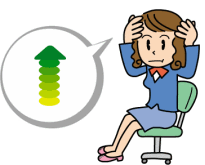
　大学生になったら、言うことを聞かなくなった、社会人になったら、言うことを聞かなくなった、このことです。<br />
　いつ帰宅しているのかわからない、何をたべているのかわからない、電話をしても通じない、電話しても「うるさい」と言われ、切られてしまう・・・<br />
　そして、一番の頭痛のタネは、HbA<font size="-1">1c</font>が上がってしまって、下がらない！このことでしょう。

<div class="title3">親がかりになりがち？</div>

高校生まではうまくっていた、HbA<font size="-1">1c</font>は悪くなかった、たぶん、そうだと思います。それは、食事の内容から、カロリーから、すべて、「親がかり」でやっていたから、お母さんの「意のままに」できたから、お母さんが先生に“言われた通りに”やっていたからでしょう。<br>
　朝の起床もおかあさんに起こしてもらっている、お母さんが起こさなければ遅刻してしまう、こんな具合であったと想像してしまいます。どうでしょうか。<br />
　言い換えれば、「自分でなにもできていなかった」ということでしょうか。

<div class="title3">自立した生活を掴む</div>

大学生になったり、社会人になると、世界は広がります。保護者がいないわけですから、インスリン注射の必要のない若者だって、お酒で失敗したり、寝坊したり、それはいろいろあります。忘れものをしたり、お金を盗まれたり、いろいろあるでしょう。<br />
　しかし、そのような「にがい経験」を通して、学んでいくわけですね。もう二度としないぞ！と。そして、お酒の飲み方が上手になっていき、付き合いも上手にできるようになっていき、体調の悪いときでもうまく仲間と付き合うことを覚えていくわけです。<p>

「高校生時代まで親がかり」のインスリン注射をしている若者はも、大学生になったから、社会人になったからといって、全員がHbA<font size="-1">1c</font>を悪化させるわけではありません。

<div class="title3">一時悪くなっても・・・</div>

一時、HbA<font size="-1">1c</font>が悪くなっても、うまく順応していく若者を多く知っています。ですから、最初の1年間くらいのHbA<font size="-1">1c</font>の悪化を、あまり追及せず、大丈夫、「来年になったら、勝手がわかってくるからうまくいくよ」と励ますことも、多いのですね。

<div class="title3">やはりなかなか自立できない</div>

ところが、来年になっても再来年にもなっても、30歳近くになって、うまくできない若者も多くいます。こういう若者のお母さんはとても心配されます。そして、おっしゃいます、「高校生まではうまくいっていたのに・・・」。<p>

20歳過ぎてもうまくできない若者をみていますと、まず、自分の生活を自分のこととして考えていない、なぜなら、これまですべておかあさんが面倒をみてくださっていたから、これからも「だれかなんとかしてくれるでしょ」という考えが、強くあるように思えてなりません。<p>

ですから、基本的なことをマッタクといってもいいほど、知らない。インスリン注射量の調節の仕方を知らない、食物のうちでどれが血糖を上げやすいものか下がりやすいものか、知らない。言いかえるなら、朝になったら決まった量の注射を打てばいいのでしょ！昼前も打てばいいのでしょ！という気持ちから、前に進んでいないのですね。<br>
　食事時に食べるのを逸したらどうしよう？、どうしていいかわからないから、食べないのだから注射も打たないでおこう、ということになってしまう。<p>

簡単にいえば、なぜインスリン注射を自分はしているのか、わかっていない、ということになりましょうか。

<div class="title3">それから、もうひとつ、あるように思います</div>

高校生までは親がかりであった若者が、もう自分で全部しなさい、と親に言われたとたん、親から見離された、と思ってしまうのです。<br>
　もう自分は親から愛させていない・・・、親から無視されてしまった・・・、もうどうでもいい・・・、無気力な若者になっていってしまいます。<br>
　うつ状態、ニート、無気力、適応障害、いろいろな名前が、新聞でもでてきますね。<p>

大人になるにはすこし早いのですね。年齢では大人なのですが、選挙権はもらえるのですが、心は大人にまだまだ、なれないのですね。]]>
        <![CDATA[<b>54 　My child was doing well until through high school…</b><p><p><p>
<div class="img">
<img src="/ichigata/2010ima/201005-1.jpg" border="0" />
</div>
"My child was doing well until through senior high school…." This is what I often hear from mothers of my patients.<br>
What they mean by this is that their children stopped listening to them once they entered college or started working. "I don't know when my child comes home or what he is eating. Even when I call, he doesn't answer the phone, or if he answers, he tells me to shut up and hangs up…."<br>
The biggest headache for such mothers is that their children's HbA1c rise and stay high. <p> 

<b>Totally depend on parents?</b><br>
"My child was doing well until through senior high school with HbA1c under control." That is perhaps right, but that was because the child was totally "dependent on" his parents for contents of meals, calories and so forth. His mother probably had him do "as she liked", and the mother probably "followed what she was told" by her child's doctor. I imagine that the mother woke him up every morning and he was late for school if she did not. Is my guess right? In other words, the child "could do nothing on his own."<p>  

<b>Gain an independent life</b><br>
Once the child enters college or starts working, his world broadens. Not being watched by parents, those patients not on insulin, for example, may experience various events such as drinking too much, oversleeping, leaving something behind and getting money stolen. They actually learn through these "bitter experience" and tell themselves not to repeat the same mistakes. They get better at drinking properly, socializing, and learn to interact well with friends even when they may not be too well.<br>
As for those on insulin who have been "totally dependent on their parents through high school", not all of them necessarily experience poorer HbA1c when they enter college or begin to work.<p>

<b>Even if HbA1c deteriorates at one point…</b><br>
I know many youngsters who experienced poorer HbA1c temporarily after entering college or beginning to work but have soon adapted themselves well to their new environment. Therefore, I do not really press them hard initially for deterioration of HbA1c but rather try to encourage them by saying that "they will have better control next year as they adapt themselves to their new environment".<p>

<b>Hard to stand on one's own</b><br>
On the other hand, even after one or two years, or even at almost 30 years of age, there are patients who cannot stand on their own feet. Mothers of such patients get very concerned and tell me, "My child was doing well until through high school…."<br>
There seems to be something in common among such patients. First of all, they have a weak sense of leading their lives since their mothers have been totally taking care of them. Therefore, they tend to believe that someone will look after them from now on too.<br>
They know almost nothing about the basics. They do not know how to adjust insulin dosage or which food is likely to make blood glucose go up or down. They simply believe they need to inject fixed amount of insulin in the morning, before lunch and so forth, and there has been no progress in their mindset.<br>
What if they do not get a chance to eat at mealtime? They do not know what to do and end up eating nothing and thus not injecting insulin.<br>
Simply put, they do not understand why they are injecting insulin in the first place.<p>

<b>There seems to be another factor</b><br>
Once those young patients totally dependent on their parents through high school are told by their parents to do everything on their own, they feel abandoned by their parents. They feel they are not loved by their parents any more and feel ignored by their parents. They come to feel nothing matters and become feckless as we may often read in newspapers etc. about such conditions as depression, NEET, apathy and adjustment disorder.<br>
They are a little too young to develop into adults. They are adults based on age and old enough to vote, but they are not psychologically ready to become adults yet.<p>
]]>
    </content>
</entry>

<entry>
    <title>高血糖恐怖症と低血糖恐怖症</title>
    <link rel="alternate" type="text/html" href="https://www.dm-net.co.jp/ichigata/2010/05/055.php" />
    <link rel="service.edit" type="application/atom+xml" href="https://www.dm-net.co.jp/mt/mt-atom.cgi/weblog/blog_id=10/entry_id=10136" title="高血糖恐怖症と低血糖恐怖症" />
    <id>tag:www.dm-net.co.jp,2010:/ichigata//10.10136</id>
    
    <published>2010-05-21T04:31:14Z</published>
    <updated>2013-06-25T07:29:38Z</updated>
    
    <summary> 血糖値の高い数字を見たら、すぐ下げたくなる高血糖恐怖症の方がいます。血糖を下げ...</summary>
    <author>
        <name>Terahata</name>
        <uri>http://www.dm-net.co.jp/</uri>
    </author>
    
        <category term="55" />
    
        <category term="E055" />
    
    <content type="html" xml:lang="ja" xml:base="https://www.dm-net.co.jp/ichigata/">
        <![CDATA[<div class="img">
<img src="/ichigata/2010ima/201005-2.gif" border="0" />
</div>

血糖値の高い数字を見たら、すぐ下げたくなる高血糖恐怖症の方がいます。血糖を下げるために、もちろんインスリンを追加注射します。<p>
その反対に、血糖値の低い数字をみるともうびっくりしてすぐ、後先を考えずに、何か甘いものをいっぱい食べてしまう方がいます。これを何度も繰りかえしてしまいます。<br>
　頭では慌てなくてもいいのだと思うのですが、その場になると、食べ過ぎるほどに食べてしまいます。このような方は低血糖恐怖症といえましょう。<p>

どちらの方も、軽いのなら問題ないのですが、極端な方もいらっしゃって、問題が起こってくることがあります。

<div class="title3">高血糖恐怖症</div>

高血糖を極端にきらうのをどこで学んだのかな？ と疑問に思うほど、高血糖値をきらいます。理由は合併症を起こすからです。<br>
　「先生、病院の壁に、HbA1c 7.0％以下にしなさいと書いてあるじゃないですか、どうしてすこしの高血糖を無視していいのですか」と言って、意識がなくなる低血糖症を何度もおこす方がいます。<p>

糖尿病と診断されて最初に入院した病院で、ともかく糖尿病性合併症というのはこわいものだ、と教えすぎることも原因のひとつかもしれません。もともと、潔癖主義の性格があったのかもしれません。<br />
　高血糖値が出たら、低血糖をおこすほどにすぐインスリンを追加して注射してしまうのですね。<p>
しかしフシギなことに、低血糖をちょくちょくおこしていることをあまり主治医に言わないことが多いのです。だから、主治医は、そんなに低血糖をおこしていることを知らないことが多いですね。HbA1c値がいいので、「こんな調子でいきましょう」となってしまいます。<br>
　そして、大きな低血糖をおこして病院に救急などで来院したときに、よく低血糖症をおこしていることがはじめて判明します。主治医、形無しです。<p>

このような高血糖恐怖症の方には、CGMS（持続糖測定システム）の器械を装着することは避けるようにと、海外の学会でCGMSのシンポジウムで話していた学者がいました。高血糖にこだわりをもってしまうからだろうということでした。<br>
　血糖測定が頻回になりやすいことも同じリクツでしょう。頻回に測定してできるだけ低くしようとしてしまいます。<p>

私は、このようなクセのある方には、できるだけ測定回数を減らすように、がんばってもらいます。がんばる気持ちが必要です。測定したい！という気持ちを「押し殺してもらう」努力をしていただきます。

<div style="margin:1em 0em 0em 2em;">
<b>低血糖症を減らす</b><br />
低血糖症を何度もおこしていると低血糖状態に慣れてしまい、低血糖症状が出にくくなるといわれているのはご存知でしょう。<br />
　私は症状が出にくくなることもよろしくありませんが、もっともっとゆったりした生活（深呼吸でもしているような、楽に空気を吸ったり吐いたりする生活）をしていただきたいと思い、すこしでも血糖測定回数を減らしていただくように、お話しします。<br>
　それに血糖測定自体はインスリン注射に比べて痛いのですね。
</div>

<div class="title3">低血糖恐怖症</div>

これは、高血糖恐怖症の反対の方です。とにかく自分にとって低い(と思われる)数字を見てしまうと不安になり、とにかく口になにか入れてしまう、不安がなくなるくらいに入れてしまいます。<br />
　頭の中では、血糖値は下げておかねばならないとは理解しているのですが、低い数字を見ると、だめなのです。一般的に、HbA1c値は良くありません。<p>

はじめての入院中に、低血糖はこわいものだ、とこれも押し付けるように教わってきたことも原因かもしれません。<br>
　もともと何に対してもこわがりの性格なのかもしれません。自分ひとりで行動することがこわいという性格なのかもしれません。<p>

この場合は、CGMSをつけることで良い方向に働く可能性が大きいです。「そうか低くなっても大丈夫なのだ」と自覚することができるからです。<br>
　CGMSでなくても、ちょっと入院して血糖を下げてもらうのもいいかもしれません。血糖値を人工的にゆっくり下げていってもらうとちゃんと低血糖症状が出てくる、ということを学ぶことがいいかもしれません。

<div class="title3">低血糖症状が出ない？</div>

また、低血糖症状が出ないので自分は低血糖がわかりにくい人間なのだ、無自覚性低血糖症を起こしやすいのだという方もいます。しかし、よくよくお聞きすると、低血糖症状がちゃんと出ていることが多いですね。<br>
　自分では、その症状を低血糖の症状だと認識していない、ことが多いのです。無自覚性ではなく、無認識性なのです。<p>

以前にも書きましたが、低血糖症状は年々変化していきます。<br>
　こんな症状も低血糖症状か？というようなこともあります。自分の体の観察、体の感じ方とでもいいましょうか、これを観察することがとても大切です。<br>
　血糖自己測定よりも、大切かもしれませんね。]]>
        <![CDATA[  55 <b>Phobia of Hyperglycemia or Hypoglycemia</b><p>
<p>
<div class="img">
<img src="/ichigata/2010ima/201005-2.gif" border="0" />
</div>

There are some patients who fear hyperglycemia so much that they want to immediately lower their blood glucose once they see high glucose measurement. In order to reduce glucose levels, they of course inject additional insulin. <br>
　On the other hand, there are some other patients who get so surprised to find low glucose measurement and just start eating a lot of sweets without thinking. They repeat this over and over. Though they know in their heads they do not need to panic, they end up eating too much at such times. These people are fearful of hypoglycemia.<br>
　In either case, if the level of their fear is not so high, it is no problem. However, some patients are paranoid, and it sometimes leads to trouble.<p>

<b>Phobia of hyperglycemia</b><br>
These patients hate hyperglycemia so much that it makes me wonder where they got that idea. They hate it because it causes complications. They would say, "Doctor, the message posted on the wall of the hospital says that HbA1c should be 7.0% or below. Why could I ignore even a little hyperglycemia?" And some of them end up developing unconscious hypoglycemia repeatedly.<br>
One of the reasons for such phobia is that there may be too much emphasis on teaching patients that diabetic complications are dreadful at their first hospital after diagnosed as diabetic. They may be obsessed with cleanliness in the first place. When they find high glucose measurement, they immediately inject additional insulin that is enough to cause hypoglycemia.<br>
　Curiously, they do not usually tell their doctors that they are often experiencing hypoglycemia. Therefore, the doctors often do no know that their patients have hypoglycemia frequently. Seeing those patients' HbA1c value being stable, the doctors may tell them to "keep it up". <br>
　Then, when such patients are brought to hospital by ambulance due to serious hypoglycemia, the doctors find out for the first time that the patients have often been developing hypoglycemia, and they lose face.<p>

I have heard a scholar at an overseas symposium on CGMS saying that such hypoglycemia-phobia patients should avoid wearing CGMS (Continuous Glucose Monitoring System) device because it will make them even more obsessed with hyperglycemia. The same logic applies to frequent blood glucose testing. These patients measure their glucose frequently to get low measurement. <br>
　I encourage patients with this habit to try hard to reduce the frequency of testing. Trying hard is what is needed. I ask them to make efforts to "force back" their urge to test.<p>

<b>Reduce hypoglycemia</b><br>
You probably know that if you have developed hypoglycemia repeatedly, you get used to being hypoglycemia which makes it difficult for hypoglycemic symptoms to show. That in itself is not a good thing, but I would rather want to have patients lead a laid-back life (inhaling and exhaling slowly as if deep breaching) and tell them to reduce the frequency of glucose testing as much as possible. At any rate, glucose testing is more painful than insulin injection.<p>

<b>Phobia of hypoglycemia</b><br>
This is the opposite of hyperglycemia phobia. These patients become nervous when looking at low glucose measurement (value that seems low to them) and just cannot resist putting food in their mouth until they are free of nervousness. They know in their heart that they have to keep their blood glucose low, but once they see low measurement value, they cannot control themselves. In general, their HbA1c is not good.<br>
　Once again, one of the reasons for such phobia may be that they may have been told emphatically at their first hospital that hypoglycemia is something that should be feared. Or they may be paranoid or afraid of acting independently in their first place.<p>

In the case of these patients, wearing CGMS is likely to lead them to a better direction since they can realize that "it is ok to have low glucose level". It does not have to be CGMS, and getting hospitalized for a short time to have their blood glucose decreased may also be a good idea because they can learn that they will have right hypoglycemic symptoms by artificially decreasing glucose value in a gentle pace.<p>

<b>No hypoglycemic symptoms?</b><br>
Some patients say that they have a difficult time sensing hypoglycemia as they do not develop hypoglycemic symptoms and thus likely to cause asymptomatic hypoglycemia. However, when I press them a bit further, I often find that they do actually have hypoglycemia symptoms. They do not recognize symptoms experienced as hypoglycemia symptoms in many cases. It is not asymptomatic but they are simply not aware.<p>

　As I have written in one of the past articles, hypoglycemic symptoms are becoming more varied year by year and some symptoms may not seem like hypoglycemic symptoms. It is very important to observe how your body really feels.<br>
　This may be more important than measuring your own blood glucose level.<p>
]]>
    </content>
</entry>

<entry>
    <title>海外の糖尿病ケアにおける動き―2010年アメリカ糖尿病学会から</title>
    <link rel="alternate" type="text/html" href="https://www.dm-net.co.jp/ichigata/2010/07/056.php" />
    <link rel="service.edit" type="application/atom+xml" href="https://www.dm-net.co.jp/mt/mt-atom.cgi/weblog/blog_id=10/entry_id=10371" title="海外の糖尿病ケアにおける動き―2010年アメリカ糖尿病学会から" />
    <id>tag:www.dm-net.co.jp,2010:/ichigata//10.10371</id>
    
    <published>2010-07-28T06:18:28Z</published>
    <updated>2012-07-24T06:04:15Z</updated>
    
    <summary> 2010年アメリカ糖尿病学会（ADA2010）は6月25日から29日にかけてフ...</summary>
    <author>
        <name>Terahata</name>
        <uri>http://www.dm-net.co.jp/</uri>
    </author>
    
        <category term="56" />
    
        <category term="E056" />
    
    <content type="html" xml:lang="ja" xml:base="https://www.dm-net.co.jp/ichigata/">
        <![CDATA[<div class="img" style="width:260px;">
<img src="/ichigata/2010ima/201007-1.jpg" border="0" />
<div  align="left" style="margin:5px 0px 0px 10px;">
2010年アメリカ糖尿病学会（ADA2010）は6月25日から29日にかけてフロリダ州オーランドで開催されました（上の画像はそのピンバッジです）。
</div>
</div>

毎年6月はアメリカ糖尿病学会が開催されます。今年はフロリダのオーランド（ディズニーワールド、ディズニーシーのあるところ）で開催されました。これで、数回オーランドに学会で来ておりますが、いまだもってディズニーワールド、ディズニーシーに出かけたことがありません。<p>

多くの発表が平行して行われますので、全部を聴講できていませんが、聴いた限りにおいて、面白かったものを、いくつか、以下に挙げてみます。<p>

これらは、日中の学会での発表と、5時半に間に合うように出かけなければならない早朝スポンサーシンポジウムや学会終了後の夜のスポンサーシンポジウムで（夜6−9時）の講演も含めてのものです。

<div class="title3">さらに新しい血糖降下薬が・・・</div>

皆さんは、インクレチンという名前を最近はなんとなく目にされると思います。GLP-1という名前も目にしたことがあるでしょう。<br />
　GLP-1と同じ作用をもった注射製剤や、血中GLP-1を長持ちさせるのみ薬が昨年末から、日本にも登場してきました（すでにアメリカを始め海外では数年前から使用されていました）。<br>
　これは、2型糖尿病の治療薬であり、1型糖尿病の治療薬ではありません。将来的には、1型糖尿病にも役立つということがわかるかもしれませんが、いまのところは2型糖尿病の方のお薬です。<p>

食後の血糖値を上昇させないようにする一方で、低血糖はおこしにくい薬ということで、いま、日本では画期的な薬として、注目を浴びています。実際にどのように血糖を下げるのか、長期に使用しても作用がきちんと継続して効くのか、これからの報告に期待がかかります。<p>

さらに、2型糖尿病の治療薬として、脳細胞に存在する神経伝達物質でアドレナリンやノルアドレナリンの前駆物質でもあるドパミンに関連した薬も開発されて、もう市場に出回っているようです。<br>
　ドパミンは快の感情に関係する神経伝達物質として有名ですが、この物質が結合する受容体に結合してドパミン作用を増強させる薬が、インスリン抵抗性を緩和させるというリクツです。<br>
　糖尿病患者さんの心血管疾患の発症抑制もできたということですが、長く使用してみて、ほんとうに体に害がないか、これから注目していくべきでしょう。<p>

腎臓の尿細管にある酵素に関連した薬も開発中です。これも主に2型糖尿病の治療薬として開発中です。<br>
　血中の糖分というのは、腎臓の糸球体というところから一旦は排泄されるのですが、その後尿細管というところから再吸収されていることがわかっていました。この再吸収に担っている酵素を抑制する薬が開発中なのです。<br>
　酵素を抑制するわけですので、尿糖が増加することになります。尿路感染症が増加することが懸念されるのですが、いまのところ、問題ないとの報告でした。これも注目していくべき薬です。

<div class="title3">インスリン製剤の開発は・・・</div>

インスリン製剤における新しい開発を、ここですこし述べます。これはまだ開発しかかったところという段階でしょうか。現在の超速効型インスリンよりもっと早く効き始めるインスリンを作成しようとしています。<br>
　普通には血糖上昇するかしないかのときにもう血中インスリン値が上昇しはじめるわけですので、これに準じたインスリンをつくろうではないか、というアイデアから来ています。<p>

一方で、現在みなさんが使用している持効型溶解インスリンよりもっと長く効き続けるインスリンも開発中です。3日間インスリンが効き続けるインスリンの臨床試験では、1日1回の現在の持効型溶解インスリンと同じ効果を示したとの報告もあります。<p>

最後に、昨年の6月ごろ、持効型溶解インスリンと発がん性のことが話題になったことを覚えていますか。1年経過してみて、冷静にもう一度検証してみるシンポジウムもありました。<br>
　高血糖と発がん性の関連はこれまで通りですが、持効型溶解インスリンとの関連はやはり問題はないとの結論がでました。<p>

あと数年しますと、さらに確証するに足る大規模調査の結果がでることになっています。また、お知らせします。]]>
        <![CDATA[56 <b>Overseas Trend in Diabetes Care - From 2010 American Diabetes Association's Scientific Sessions</b><p>

<div class="img" style="width:260px;">
<img src="/ichigata/2010ima/201007-1.jpg" border="0" />
<div  align="left" style="margin:5px 0px 0px 10px;">
ADA2010 was held from June 25th through 29th in Orlando, Florida. (The pin in the above photo is from the meeting.)
</div>
</div>
American Diabetes Association's Scientific Sessions (ADA) are held in June every year, and it was held in Orlando, Florida (where Walt Disney World is located) this year. I have been to Orlando several times for academic meetings, but I have never had a chance to visit Wald Disney World. <br>
　Though I could not attend all the presentations as many different presentations are given in parallel, I would like to list below some presentations I attended and found interesting. <br>
　These presentations include those given during daytime sessions, early-morning sponsored symposiums (for which you have to be at the venue by 5:30am) and evening sponsored symposiums (from 18:00 to 21:00).<p>

<b>Newer antihyperglycemic agent</b><br>
You may have probably heard of incretin as well as GLP-1. Injectable formulation that has the same action as GLP-1 and oral drug that keeps GLP-1 long in the blood were launched at the end of last year. (They have been used in the U.S. and other countries for several years already.)<br>
　These are therapeutic agents for type 2 diabetes, not for type 1 diabetes. Though they may be found useful to treat type 1 diabetes also in the future, they are currently designed for type 2 diabetes. These drugs have been attracting much attention in Japan as revolutionary agents that suppress the rise of postprandial glucose levels with fewer chances of causing hypoglycemia. How do these agents actually reduce blood glucose levels? Will they act continuously even if used over a long period of time? We are very much looking forward to such reports going forward.<br>
　Furthermore, a drug related to dopamine (which is a neurotransmitter existing in brain cells and also an adrenaline and noradrenaline precursor) that has been developed as therapeutic agent for type 2 diabetes is already in the market. Dopamine is a well-known neurotransmitter related to feelings of pleasure. The principle of the aforementioned drug is that receptor-bound dopamine increases dopamine action and mitigates insulin resistance. The drug has been reportedly successful in suppressing the onset of cardiovascular diseases in diabetes patients. It will need to be monitored whether it will not be really harmful to the body when used over a long period of time.<br>
　Drug related to enzyme existing in kidney tubule is also being developed as therapeutic drug mainly for type 2 diabetes. Sugar in the blood is excreted once from the glomerulus in the kidney, but it has been known that it gets reabsorbed after that through the tubules. The drug being developed suppresses enzyme that plays a role in the reabsorption. Suppressing the enzyme increases blood sugar.<br>
 Though there is some concern about possible increase in urinary tract infection, it was reported in the presentation that no problem has been found for now. This is another drug that we should keep giving an eye to.<p>

<b>Development of insulin formulation</b><br>
I would like to briefly touch on the development of new insulin formulation. Though it is still in the very early stage of development, insulin product that will start acting even faster than the existing super rapid-acting insulin is being developed. Serum insulin level begins to rise scarcely when blood glucose level starts rising, and the idea of this new insulin is to create insulin product that starts acting fast enough.<br>
　Meanwhile, insulin product that will act even longer than the existing long-acting soluble insulin is being developed as well. There has even been a report that in a clinical trial on insulin product that keeps acting for three days, it produced the same effects as the existing long-acting soluble insulin administered once a day.<br>
　Finally, do you remember that carcinogenicity of long-acting soluble insulin became a hot topic around June last year? One year has passed, and there was a symposium that tried to verify the correlation once again with aplomb. As in the past, the link between hyperglycemia and carcinogenicity is pointed out, but it has been concluded for now that there is no correlation between long-acting soluble insulin and carcinogenicity. In several years, the results of a large study for further verification are supposed to come out. I will provide an update on this topic again.<p>
]]>
    </content>
</entry>

<entry>
    <title>基本的な4回注射法の落とし穴　夕食が遅くなる</title>
    <link rel="alternate" type="text/html" href="https://www.dm-net.co.jp/ichigata/2011/11/057.php" />
    <link rel="service.edit" type="application/atom+xml" href="https://www.dm-net.co.jp/mt/mt-atom.cgi/weblog/blog_id=10/entry_id=16170" title="基本的な4回注射法の落とし穴　夕食が遅くなる" />
    <id>tag:www.dm-net.co.jp,2011:/ichigata//10.16170</id>
    
    <published>2011-11-15T03:22:51Z</published>
    <updated>2012-07-24T06:04:57Z</updated>
    
    <summary>だいぶ、ご無沙汰いたしました。すこし忙しくなりまして、なかなか落ち着いて原稿を書...</summary>
    <author>
        <name>Terahata</name>
        <uri>http://www.dm-net.co.jp/</uri>
    </author>
    
        <category term="57" />
    
        <category term="E057" />
    
    <content type="html" xml:lang="ja" xml:base="https://www.dm-net.co.jp/ichigata/">
        <![CDATA[だいぶ、ご無沙汰いたしました。すこし忙しくなりまして、なかなか落ち着いて原稿を書く時間が取れませんでした。また、気づいたことをすこしずつ、皆様と考えてみたいと思います。<br />
　今回は、一番多くの方が行っているインスリン注射法である頻回注射法について、再度考えてみます。

<div class="title3">基本的な4回注射法</div>

基本的な4回注射法と書いたのは、基本的には、ということです。<br>
　実際には、1型糖尿病の方はその日によって4回であったり、5回であったりしますので、基本的には4回法であることが多いので、と書きました。
<p />
外来で、1型糖尿病のプロ級の方に「何回注射しているの？」と聞いても、「その場に行ってみないとわからない」といわれてしまいます。血糖コントロールの上手な方は、ほとんどそうです。<p>
単位数についても、「今何単位くらい注射しているの」と聞いても、「さあ、行ってみないとわからない」と言われてしまいます。<br>
　ですから、きっと、血糖コントロールの上手な方は、今回書くようなことはすでに解決済みのことでしょう。

<div class="title3">食事と食事のインターバルが6時間から7時間の場合</div>

基本的4回注射といえば、毎食前と寝る前ないし朝の4回注射でしょう。<br>
　この方法は、それまでの混合2回注射や混合製剤や速効型製剤を使用した3回法より、画期的に血糖コントロールしやすい方法であることには、何の疑問もありません。<p>
ただし、食事と食事の間が6時間や7時間くらいの場合という条件の下でのみ、疑問の余地がないほどに良い方法、なのですね。<p>
つまり、食前の超速効型や速効型インスリンが切れるころまでに次の食事をするようにすれば、うまくいくわけです。もちろん、その食事前にインスリン注射をします。

<div class="title3">食事と食事のインターバルが8時間とか9時間、それ以上の場合</div>

インターバルの時間があけばあくほど、次の食事前の血糖値が上昇してきます。<br>
　1型糖尿病の方は自分のインスリンがほとんどないのでもちろん、2型糖尿病の方も自分のインスリン分泌能が低下しているほど、食前血糖値は上昇します。<br>
　特に、夕食が遅くなるほうが、昼食が遅くなるより血糖値が上昇しがちです。<p>
また、超速効型製剤のほうが速効型製剤より早く切れるため、インスリン抵抗性気味の思春期や20代の1型糖尿病の若者で、特にはっきりと血糖が上昇してくるのがわかります。
<p />
<b>どうすればいい？</b><br />
持続型溶解インスリンないし中間型インスリン製剤を、朝と夕の2回、朝と寝る前の2回注射する場合もあるでしょう。昼と寝る前の2回に、注射している方もいるでしょう。<br>
　このように、どうしてもうまくいかない場合は、基礎インスリンを2回注射することも行います。これでは、基本的4回注射法ではなく、5回注射法になりますね。<p>
昼食前にミックス50製剤とか、70ミックス製剤を使用してみるのも一考です。この場合、比率を考え、超速効型や速効型製剤のインスリン量より単位数を多くします<p>
夕食が遅いのなら、18、19時ごろに軽く食べることも一考です。そして、追加インスリンを2から4単位くらい注射する。ないし、食べなくても速効型インスリンを2単位くらい注射しておいて、帰宅する、などといった方法も、いいと思います。<p>
]]>
        <![CDATA[57<b> Basic Pitfall of Four-time Daily Injection Regimen - Late Dinner</b><p>

It has been quite a long time since the last article. I have become a little busier and could not set aside time to sit down and write an article. I would like to start sharing with you again what I have been observing and finding. This time, let us think about multiple dose regimen practiced by the largest population of patients.<p>

<b>Basic four-time daily injection</b><br>
The reason why I say "basic" four-time injection regimen is that it is basically four times a day. In reality, type 1 diabetes patients may inject insulin four or five times depending on a day. If I ask very experienced type 1 outpatients, "How many times a day do you inject insulin?" they answer, "I won't know until the time comes." This holds true for almost all the patients who are adept at glycemic control. Even when I ask, "How many units do you inject currently?" they tell me, "Well, I won't know until the time comes." So what I will be writing about in this article is likely to be an already resolved issue for those patients good at glycemic control.<p>

<b>When the interval between meals is six to seven hours</b><br>
Basic four-time daily injection regimen would involve an injection before each meal and an injection before bedtime or in the morning. There is no doubt that this makes it significantly easier for patients to control blood glucose than with twice daily injection of mixed insulin or with three-time daily injection of mixed or regular insulin. However, this is true only when the interval between meals is six to seven hours. In other words, if you have a meal by the time short-acting or regular insulin injected before the previous meal wears off, basic four-time daily injection would work well. You would, off course, inject insulin before that meal.<p>

<b>When the interval between meals is eight to nine hours or longer</b><br>
The longer the interval between meals is, the higher pre-prandial blood glucose rises. Not only type 1 patients who have almost no insulin secretion but also type 2 patients with low insulin secretion ability experience higher pre-prandial glucose levels. Blood glucose level is likely to go up more when you have late dinner than late lunch. Also, since short-acting insulin wears off faster than regular insulin, rise in blood glucose level is conspicuous especially in adolescents with insulin resistance tendency and young type 1 patients in their 20's.<p>

<b>What to do?</b><br>
You may inject long-acting soluble or intermediate-acting insulin twice, once in the morning and once in the evening or once in the morning and once at bedtime. In some cases, you may inject at lunchtime and bedtime. If it is just difficult to control blood glucose in any way, patients may inject basal insulin twice in this manner. Then, this is not basic four-time daily injection regimen but five-time daily injection regimen.<br>
It may be worth considering using mix 50 or 70 insulin before lunch. In this case, considering the ratio, you inject more units of insulin than when you inject short-acting or regular insulin. If you are going to have late dinner, it is also worth considering having a light meal around 6 or 7 pm. And then you inject two to four units of additional insulin. Or even if you do not have a light meal, you could inject about two units of regular insulin and then go home and eat dinner.<p>]]>
    </content>
</entry>

<entry>
    <title>新薬ラッシュだけどやはり食事！</title>
    <link rel="alternate" type="text/html" href="https://www.dm-net.co.jp/ichigata/2012/02/058.php" />
    <link rel="service.edit" type="application/atom+xml" href="https://www.dm-net.co.jp/mt/mt-atom.cgi/weblog/blog_id=10/entry_id=16842" title="新薬ラッシュだけどやはり食事！" />
    <id>tag:www.dm-net.co.jp,2012:/ichigata//10.16842</id>
    
    <published>2012-02-23T10:21:05Z</published>
    <updated>2012-07-24T06:48:36Z</updated>
    
    <summary>日本における経口血糖降下薬の歴史 振り返ってみますと、血糖値を下げる薬「血糖降下...</summary>
    <author>
        <name>SAKA</name>
        
    </author>
    
        <category term="58" />
    
        <category term="E058" />
    
    <content type="html" xml:lang="ja" xml:base="https://www.dm-net.co.jp/ichigata/">
        <![CDATA[<div class="title3">日本における経口血糖降下薬の歴史</div>

振り返ってみますと、血糖値を下げる薬「血糖降下薬」は、日本では、1957年に第1世代スルフォニ−ル尿素薬（一番よく使用されている2型糖尿病の薬の、最初に創薬されたもの）、1961年にビグアナイド薬という薬、1993年にはα-グルコシダーゼ阻害薬、1997年にチアゾリジン薬という薬、1999年には速効型インスリン分泌薬という薬が市場に出て発売されています。
<p />
1999年を最後に、その後しばらく新しい薬効をもつ薬が登場していませんでしたが、2009年末から久しぶりの新薬であるインクレチン製剤が登場しはじめたというわけです。

<div class="title3">インクレチン関連薬</div>

インクレチン関連薬には、2種類あります。DPP-4阻害薬というものとGLP-1受容体作動薬というものです。DPP-4阻害薬は飲み薬で、GLP-1受容体作動薬は注射薬です。ともに、2型糖尿病の治療薬という位置づけになっています。<br />
　これは食後の血糖上昇を抑え、そして食前血糖値をいたずらに低下させないという、まさしく理想的な薬剤になると、大いに期待されて、臨床試験においてもそのようにうまく薬効が示されましたので、市場に出回るのが今か今かと待たれて、市場にでたわけです。
<p />
市場に出回りはじめてすぐ、他の経口血糖降下薬と併用して使用すると低血糖をおこしうることが判明し、日本糖尿病学会および日本糖尿病協会から、適正使用に関する提言が出されました。

<div class="title3">低血糖をおこさない、高血糖をおこさない、そして体重増加をきたさない薬？</div>

これからどんどんと新しい薬が創薬されるようです。しっかりと食後血糖を抑えてかつ低血糖をおこしにくい、そして体重増加を来たさないもの、というコンセプトの元に開発がなされているわけですね。<br />
　インクレチン関連薬に関してはしょっぱなで、おこさないと言われていた低血糖をおこすこと、これからさらに詳しい解明もなされることでしょう。
<p />
これから市場に出てくる治療薬は、治療薬の効能と効果を最大限に発揮してもらうべく、患者さんも医療者も注意深く、そして上手に使用していくべきでしょう。<br />
　いまのところ2型糖尿病用の薬として開発されていても、1型糖尿病にも使用できそうという薬も出てくるでしょう。海外では試みもなされています。

<div class="title3">今のところは</div>

薬を服用ないしインスリン製剤なら注射することをしっかりと行うことがもちろん大事になりますが、もうひとつ、治療薬の効能と効果を最大限に発揮させるためには、やはり食事のことが欠かせません。<br />
　食事の内容、食事時間、食事回数がどうであっても、薬やインスリン製剤がしっかりとフォローしてくれて、高血糖も起こさず低血糖もおこさず血糖コントロールしてくれるのだ、というふうにはならないのです。
<p />
三度の食事をきちんと取っているか、バランスはどうか、嗜好に偏りはないか、夕食は遅くなっていないかなどなど。<br />
　また一方では、厳密に行っているがゆえに空腹感でいらいらしていないか、これも大事なチェックポイントです。
]]>
        <![CDATA[58<b> New Drugs Keep Coming But Eating Properly Comes First! </b><p>

<b>History of oral hypoglycemic drugs in Japan</b></br>

Looking back the history of “hypoglycemic drugs” that lower blood glucose levels, the first-generation sulfonylurea drug (the first drug developed for type 2 diabetes that is most commonly used) was launched in Japan in 1957, followed by biguanide in 1961, α-glucosidase in 1993, thiazolidine in 1997 and rapid-acting insulin secretagogue in1999. And since 1999, drugs with new efficacy had not been released until the end of 2009 when incretin was launched.<p>


<b>Incretin drugs</b></br>

There are two types of incretin drugs: DPP-4 inhibitor and GLP-1 receptor agonist. DPP-4 inhibitor is an oral drug while GLP-1 receptor agonist is an injection drug. Both of them are positioned as drugs for the treatment of type 2 diabetes.<br>

 Before the launch, there were high expectations of these drugs to become ideal drugs to suppress the rise in postprandial blood glucose and to prevent unnecessary descent of preprandial glucose levels. Clinical trials for the drugs showed such efficacy, and their launch was eagerly awaited. <br>

Soon after they hit the market, it turned out that they caused hypoglycemia when used with other oral hyperglycemic drugs. In response to this, the Japan Diabetes Society and the Japan Association for Diabetes Care and Education issued recommendations on the proper use of these drugs. <p>


<b>Drugs that prevent hypoglycemia, hyperglycemia, and that do not cause weight increase? </b></br>

More and more new drugs are in the pipeline, developed based on the concept of suppressing postprandial glucose well while causing less hypoglycemia, and of causing no weight gain. <br>

 Incretin drugs, upon their release, were found to cause hypoglycemia, which was not supposed to happen. Further clarification of the cause will probably be made from now on. <br>

Patients and health professionals should carefully and wisely use drugs that will come on the market in order to maximize their effects and efficacy. <br>

Among drugs being initially developed for type 2 diabetes, there may be some drugs that could be found useful also for type 1 diabetes. Such endeavor has been already made overseas. <p>


<b>For now</b></br>

Needless to say, it is important to take drugs or inject insulin properly. In addition, it is indispensable to eat properly in order to make the most of drugs’ effects and efficacy. <br>

However, drugs or insulin formulation will not be able to prevent hyperglycemia and hypoglycemia and control blood glucose levels unless they are accompanied by well-balanced diet, proper timings of meals and the number of meals. Are you properly eating three meals a day? Are you having well-balanced diet? Are you not eating dinner too late? These are all important points. <br>

 On the other hand, as you stick to a strict diet, are you not irritated from empty stomach? This is another important question to ask yourself.<p>]]>
    </content>
</entry>

<entry>
    <title>インスリン50年歴の小児期発症1型糖尿病患者さんが増加</title>
    <link rel="alternate" type="text/html" href="https://www.dm-net.co.jp/ichigata/2012/07/059.php" />
    <link rel="service.edit" type="application/atom+xml" href="https://www.dm-net.co.jp/mt/mt-atom.cgi/weblog/blog_id=10/entry_id=18900" title="インスリン50年歴の小児期発症1型糖尿病患者さんが増加" />
    <id>tag:www.dm-net.co.jp,2012:/ichigata//10.18900</id>
    
    <published>2012-07-25T04:41:39Z</published>
    <updated>2012-09-25T09:09:41Z</updated>
    
    <summary>もっと受賞されてもよい方がいらっしゃる？ 　31回のこのコーナーで、50年間イン...</summary>
    <author>
        <name>Terahata</name>
        <uri>http://www.dm-net.co.jp/</uri>
    </author>
    
        <category term="59" />
    
    <content type="html" xml:lang="ja" xml:base="https://www.dm-net.co.jp/ichigata/">
        <![CDATA[<div class="title3">もっと受賞されてもよい方がいらっしゃる？</div>

　31回のこのコーナーで、50年間インスリン注射を継続した方に賞が受賞されることを書きました。<a href="http://www.dm-net.co.jp/ichigata/2007/12/031.php" target="_blank">リリーインスリン50年賞</a>です。名前が刻印された純銀のメダルがいただけます。<br />
　インスリン注射は途中中断していても合計年数が50年あれば、申請することができます。
<p />
受賞するなんて晴れがましいことはキライだ、と言って申請しない方もいらっしゃいますので、たぶん、もっと、日本には受賞されてもよい方がいらっしゃると思います。
　下図は、リリーインスリン50年賞の年度別受賞者数などを記載したものです。

<div align="center" style="margin:15px 0px 15px 0px;">
2003年からの受賞者の人数<br />
<img src="http://www.dm-net.co.jp/ichigata/2012ima/201207-2.jpg" border="0" />
</div>

　第9回（2011年）までに全国で40名の方が受賞されています。データ非公開の方もおられますので詳しくはわかりませんが、少なくとも小児期発症1型糖尿病の方が12から13名以上おられると思います。日本の小児サマーキャンプ卒業生で50年賞受賞の対象になり始めたのが2009年です。<br />
　1型糖尿病ですから、1日もインスリン注射を止めることなく、50年間インスリン注射をしたということです。

<div class="title3">50年前のインスリン治療は</div>

　50年前は、今とたいぶ異なっています。<br />
　インスリン注射の針は使い捨てではありません。インスリンはビンの中に入っています。<br />
　注射の針をビンの口のゴムに突き刺し、ビンからインスリン液を吸出し、その注射器で注射します。よって一度ゴムを突き刺した針でまた皮膚に注射することになるので、針先の鋭さはなくなっていきます。その針を何回も使用します。<br />
　針の太さは、採血する針くらいの太さです。皮膚に刺すと"ぶすっ"と音がしたとのこと。<br />
　インスリン注射の針、注射器は何度も使用するので、自宅で水を張ったアルミの弁当箱に入れて、煮沸して、使用します。
<p />

　インスリン製剤も、今のように速効型や超速効型インスリンは、まったく手に入りません。レンテインスリンというインスリンを使用します。これは、今の30Rインスリンのようなものです。<br />
　朝1回、レンテインスリンを大量に注射します。よって、30Rのようなインスリン製剤ですから、高血糖になってもすぐ下げることができないので、平生、高血糖にならないようにします。
<p />

　いつでも血糖測定ができないのです。測定機器がよくないので、測定しても信用できません。また、測定機器は高価ですので、だれもが持ってはいません。のどが乾いたりトイレに行きたくなったら高血糖だ、と判断する程度です。血糖値で判断できない時代でした。
<p />

　朝1回のインスリン注射でしたから、高血糖にならないために、朝食はしっかりと、昼はほどほどに、夕食は軽く食べるようにしていました。食後の高血糖をできるだけ避けるというように、自分自身で工夫してこられたようです。

<div class="title3">50年前のインスリン治療は</div>

　リリーインスリン50年賞受賞された方々にはインスリン注射開始50年以上を経て、元気に暮らして居られる方が大勢おられます。
<p />
　第1回目のつぼみの会サマーキャンプ参加者の対談「サマーキャンプ卒業生、元気です」が「さかえ」（Vol.52、No.5）の記事になっています。第1回に参加された方々は失明してもいませんし、視力もばっちり、透析もしておられません。
<p />
　このような方々にどうして大きな合併症がないのか、じっくりと伺いたいと思っているところです。
<p />
リリーインスリン50年賞　<a href="https://www.diabetes.co.jp/csr/award/default.aspx" target="_blank">https://www.diabetes.co.jp/csr/award/default.aspx</a>
]]>
        
    </content>
</entry>

<entry>
    <title>小児ヤングの皆さんへ、JADEC（日本糖尿病協会）のサポート</title>
    <link rel="alternate" type="text/html" href="https://www.dm-net.co.jp/ichigata/2025/05/jadec.php" />
    <link rel="service.edit" type="application/atom+xml" href="https://www.dm-net.co.jp/mt/mt-atom.cgi/weblog/blog_id=10/entry_id=38952" title="小児ヤングの皆さんへ、JADEC（日本糖尿病協会）のサポート" />
    <id>tag:www.dm-net.co.jp,2025:/ichigata//10.38952</id>
    
    <published>2025-05-19T05:12:02Z</published>
    <updated>2025-05-23T05:29:38Z</updated>
    
    <summary>　 長らくご無沙汰しました。13年ぶりに戻ってきました。大学業務や病院業務でキリ...</summary>
    <author>
        <name>DM-NET</name>
        <uri>http://www.dm-net.co.jp/</uri>
    </author>
    
        <category term="60" />
    
    <content type="html" xml:lang="ja" xml:base="https://www.dm-net.co.jp/ichigata/">
        <![CDATA[<p>　 長らくご無沙汰しました。13年ぶりに戻ってきました。大学業務や病院業務でキリキリ舞いの年月でしたが、JADEC（日本糖尿病協会）の活動は委員の皆さん（医師、看護師、お仕事に従事している患者さん、メーカーの方々）と引き続き行っておりました。全国の小児、ヤングの皆さんの顔を思い浮かべながら、「こんなことができることになったらいいだろうな」という案件を持ち寄り、委員会で申請書を作り上げ、JADECの各会議体の理解と承認を得て進めてきました。<br>
    　いくつかご紹介したいと思います。これはすべて、JADECの月刊誌「さかえ」にその都度紹介されたことですが、わかりやすく、もう一度書きたいと思います。くわしくはJADECのHPをご覧ください。
</p>


<h2 class="title3">『インスリンメンター』のお兄さんお姉さん</h2>
<p>　JADEC主催の小児キャンプで、『インスリンメンター』のお兄さんやお姉さんに会ったことがあるぞという皆さんがおられるかと思います。各地の小児キャンプや関連集会で、講演をしたりキャンパーやご家族と膝をつきあわせてお話しできる１型のお兄さんお姉さんたちです。インスリンメンター制度はJADECが2015年に立ち上げた制度で、認定したインスリンメンターは現在11人。平生は社会人として各方面で活躍していますが、小児キャンプや各地の集会ではリーダーとして活躍してきた経験を持っています。今年も、メンターのお兄さんお姉さんに各地の小児キャンプに出向してもらう予定です。こんなときはどうしたらいいんだろう？という悩みや、不安に思っていることなどをしっかり聞いてくれるでしょう。
</p>
 
<h2 class="title3">保育園、幼稚園、学校の先生方との勉強会</h2>

<p>　2つめは『キッズプロジェクト』です。これは、保育園、幼稚園、学校の先生方からJADECにご依頼をいただいて実施する「医師とインスリンメンターによるダイアベティス教室」で、専門医とインスリンメンターがご依頼のあった保育園、幼稚園、学校に出向いてお話しします。インスリンのことがわからない先生方のご不安を少しでも取り除くことができたらという目的で、2017年から実施しています（対面もオンラインもあり）。</p>

<h2 class="title3">小児科から内科への移行期サポート</h2>

<p>　さて、若い患者さんが小児科医から内科医に診療を移行する時期は、大学や専門学校への入学や就職などで親元を離れる時期と重なることが多いのが現状です。主治医の小児科の先生にとって、土地勘もないところの医療機関の内科のどの先生に紹介したらいいのか、情報がなかなか入りにくいことが多々あります。こんなときは、JADECのHPに掲載の『移行期医療コーディネーター制度』をご利用ください。その地域で診療にあたってくれる1型糖尿病に精通した専門内科医を探し、仲介します。仲介をしてくれる糖尿病内科医師を『移行期コーディネーター』としてお願いしております（関連学会の協力を得て）。かかりつけの小児科の先生にぜひ利用してもらいたいです。</p>

<h2 class="title3">園・学校の先生が『グルカゴン点鼻薬』を投与</h2>

<p>　最後に、学校での『グルカゴン点鼻薬』の投与についてお伝えします。重症低血糖時の救急処置として使用されるグルカゴン点鼻薬の投与は、本人のほか、医療従事者と家族にのみ認められていましたが、2024年1月に、かねてよりJADECが要望していた園・学校の先生によるグルカゴン点鼻薬の投与が文科省、厚労省の認可を得ました。学校の先生向けのマニュアルも作成され、関連学会の承認を得て、JADECのHPに掲載されています。</p>

<p>　どうぞ、上記のことが必要になったとき、JADECのHPをご覧いただき、ご利用ください。</p>

<h2 class="title3">参考サイト</h2>
<ul>
    <li>・<a target="_blank" href="https://www.nittokyo.or.jp/">JADEC（日本糖尿病協会）公式ホームページ</a></li>
    <li>・<a target="_blank" href="https://www.nittokyo.or.jp/modules/sakae/index.php?content_id=1">JADEC月刊誌「さかえ」</a></li>
    <li>・<a target="_blank" href="https://www.nittokyo.or.jp/modules/about/index.php?content_id=39">「インスリンメンター制度」のご案内</a></li>
    <li>・<a target="_blank" href="https://www.nittokyo.or.jp/modules/about/index.php?content_id=43">訪問プログラム「KIDS Projectキッズプロジェクト」</a></li>
    <li>・<a target="_blank" href="https://www.nittokyo.or.jp/modules/doctor/index.php?content_id=50">「移行期医療コーディネーター制度」</a></li>
    <li>・<a target="_blank" href="https://www.nittokyo.or.jp/modules/about/index.php?content_id=61">「グルカゴン点鼻薬」の幼稚園・保育園・学校での使用</a></li>
</ul>]]>
        
    </content>
</entry>

<entry>
    <title>備えあれば憂いなし ー災害とインスリン治療　</title>
    <link rel="alternate" type="text/html" href="https://www.dm-net.co.jp/ichigata/2025/09/061.php" />
    <link rel="service.edit" type="application/atom+xml" href="https://www.dm-net.co.jp/mt/mt-atom.cgi/weblog/blog_id=10/entry_id=41591" title="備えあれば憂いなし ー災害とインスリン治療　" />
    <id>tag:www.dm-net.co.jp,2025:/ichigata//10.41591</id>
    
    <published>2025-09-11T08:40:26Z</published>
    <updated>2025-09-12T00:22:40Z</updated>
    
    <summary>大雨、ゲリラ豪雨、そして大地震 　「線状降水帯」や「ゲリラ豪雨」など、記録的な大...</summary>
    <author>
        <name>DM-NET</name>
        <uri>http://www.dm-net.co.jp/</uri>
    </author>
    
        <category term="61" />
    
    <content type="html" xml:lang="ja" xml:base="https://www.dm-net.co.jp/ichigata/">
        <![CDATA[<h2 class="title3">大雨、ゲリラ豪雨、そして大地震</h2>
<p>　「線状降水帯」や「ゲリラ豪雨」など、記録的な大雨、豪雨をもたらすこの言葉を最近よく耳にしますね。この夏は、日本の多くの地域で突然激しい雨が降り、山崩れ、道路の冠水や交通障害をおこし、大水害となっています。<br>
　大地震はというと、阪神・淡路大震災（1995年、マグニチュード（M）7.3）、新潟県中越地震（2004年、M6.8）、東日本大震災（2011年、M9.0）から13年を経て、2024年１月に発災した能登半島大地震（M7.6）は記憶に新しいところですが、世界ではM７やM８の大地震が今年になってもう３つも発生しています。M7.1のチベット自治区地震が１月７日、M7.7のミャンマー地震が３月２８日、そしてM8.8のカムチャッカ半島地震は７月３０日に発生しました。後者による津波が日本にも押し寄せて、高いところに避難した方もおられるでしょう。</p>
 
<h2 class="title3">何があってもインスリンは必須アイテム</h2>
<p>　１型糖尿病の皆さんのインスリン治療は、ペン型デバイスを用いた頻回のインスリン注射法とともに、最近は電池で動くインスリンポンプやCGM（持続血糖測定器）を使用して血糖管理する方が多くなりました。<br>
　大災害がおきると、急いで自宅や現場を離れて避難所などに避難するとか、早めの退社をと言われたが交通機関がマヒしてしまって自宅にもたどり着けない状況がおこりえます。誰もがパニックになってしまいます。<br>
　自宅から避難所に行くことになっても、「お薬手帳、保険証は持ったか？」、「インスリンペンは何本持参するか？」、「注射針は？」、「サイフ、カードはどうする？」とバタバタしてあせってしまいます。<br>
インスリンポンプやCGMで血糖管理している場合は、電池やチューブなどのグッズは必須アイテム。なのにもかかわらずそれらを持参するのを忘れたり、持参したけど足りないということはやはりおこりえます。<br>
　いつもインスリンペンを使っている方は予備のインスリンペンをかばんに入れていますね。予備を持っていれば、当面のインスリン治療はOKでしょう。職場や学校に、予備としてインスリンペンを注射針と一緒にタオルやTシャツでグルグル厚巻きにして日付をメモしてロッカーに入れておくのも一案（入れっぱなしではなく定期的に交換して使用しましょうね）。<br>
　インスリンポンプを使用している方は電池やチューブなどのグッズがない、わずかな本数しか持っていない場合は、パニックになってしまいます。また、ポンプのトラブルが発生すれば、さらにパニックになってしまいます。ぜひ、インスリンペンを、日々、常時、持参していただきたい。</p>

<h2 class="title3">インスリンペンを常時持参して「備える」</h2>
<p>　インスリンポンプの方は、インスリンペンを災害<u>時だけ</u>ではなく、<u>常時、</u>持参しましょう。そして、インスリンペンを用いて頻回注射する時の単位数をおおよそ決めておきます。普段の外来診察の際、主治医の先生とインスリンペンで頻回注射なら何単位ずつ注射するといいか、前もって相談しておくといいですね。</p>

<h2 class="title3">何があってもインスリン治療の継続</h2>
<p>　「大災害なんてそうそう遭わないものだ」、「そんなに心配することはないよ」と思わないでください。昨今のゲリラ豪雨は全国どこでも発生する可能性があると言っても過言ではないこの夏です。</p>


<h2 class="title3">JADEC（日本糖尿病協会）のウェブサイト</h2>
<p>　この機会に災害時の糖尿病治療について、ちょっと勉強してみませんか。<br>　信頼できる情報がまとめられたウェブサイトを紹介します。<br><br>
<a href="https://www.nittokyo.or.jp/modules/patient/index.php?content_id=32" target="_blank">糖尿病とともに生きる人の災害への備え（JADEC）</a><br>
　災害への備えや避難時に役立つ情報、ツールがまとめられています。<br>
<br>
また、JADECでは、災害時にインスリン製剤をもって避難できなかった場合に、位置情報をLINEで送ることによって、インスリン製剤の入手が可能な薬局などの情報が入手できるサービスを提供しています。日々インスリン治療を行う方は、災害への備えとしてぜひご登録ください。<br><br>
<a href="https://www.nittokyo.or.jp/uploads/files/diamat_p_line.pdf" target="_blank">インスリン注射が必須の方用LINE登録システム（JADEC）</a><br><br>

　他にも、日本糖尿病学会と協同してJADECはDiaMATという災害時糖尿病医療支援チームを立ち上げています。１年前の能登半島地震の際には、DMAT（厚生労働省の委託事業として活動する「災害医療派遣チーム」）やJMAT（日本医師会が編成する災害医療支援チーム）などと連携し、被災地の糖尿病患者さんのために素晴らしい活動をされました。<br>
<br>
　こうした支援体制があることも心に留めながら、まずはご自身でできる「備え」から、今、始めていきましょう。</p>]]>
        
    </content>
</entry>

<entry>
    <title>ロジャー・モーア プロジェクトが世界糖尿病デーを期してスタート</title>
    <link rel="alternate" type="text/html" href="https://www.dm-net.co.jp/ichigata/2025/12/post.php" />
    <link rel="service.edit" type="application/atom+xml" href="https://www.dm-net.co.jp/mt/mt-atom.cgi/weblog/blog_id=10/entry_id=41779" title="ロジャー・モーア プロジェクトが世界糖尿病デーを期してスタート" />
    <id>tag:www.dm-net.co.jp,2025:/ichigata//10.41779</id>
    
    <published>2025-12-18T02:10:30Z</published>
    <updated>2025-12-23T00:47:27Z</updated>
    
    <summary>今年の世界糖尿病デーのJADEC目玉トピックス 　JADEC（日本糖尿病協会）は...</summary>
    <author>
        <name>DM-NET</name>
        
    </author>
    
    <content type="html" xml:lang="ja" xml:base="https://www.dm-net.co.jp/ichigata/">
        <![CDATA[<h2 class="title3">今年の世界糖尿病デーのJADEC目玉トピックス</h2>
<p>　JADEC（日本糖尿病協会）は、糖尿病（ダイアベティス）についてその病型にかかわらず、正しい知識の普及啓発、アドボカシー活動を1961年から進めています。このコーナーの読者でしたら、JADECは毎年の「小児糖尿病サマーキャンプ」を管轄しているところだと覚えておられるでしょう。<br>
　JADECは、今年の世界糖尿病デー（2025年11月14日）を期して、「新しく、ロジャー・モーア　プロジェクトを活動開始します」と、報道各社に向けて発表しました（JADECのHP参照）。発表内容は特に１型糖尿病のお子さんに向けてのことですので、このコーナーでもその報道内容をたどってお知らせしたいと思います。
</p>
 
<h2 class="title3">ロジャー・モーア　プロジェクトとは？</h2>
<p>　日本にて製薬企業を長年経営されてこられたロジャー・モーア氏から、日本の糖尿病の子どもたちの未来のために、継続的な支援をしたいという申し出がJADECにありました。<br>
　長年、サマーキャンプをはじめ子どもの糖尿病の支援をしてきたJADECは、このご厚意をありがたくお受けし、早速、どのような事業を新しく発足させるとロジャー・モーア氏の熱い思いを形にすることができるのかと、検討を開始しました。JADEC理事長、ロジャー・モーア氏とともに、JADEC内の企画委員会とペイシェントサポート委員会/小児・ヤング糖尿病対策委員会から各々数名の委員が集まって活発な討議を半年にわたり行いました。そしてロジャー・モーア氏のご意見、ご承諾をいただいて内容を固め、最終的に本年の世界糖尿病デーの記念日に公開したという流れです。

</p>

<h2 class="title3">このプロジェクトは何をするのか？</h2>
<p>　１型糖尿病とともに生きる子どもたちとその家族にフォーカスを当てて、初年度は以下の３つの支援をすることにまとまりました。<br>
　第一に、発症初期のお子さんへの支援です。発症直後のお子さん、ご家族には、強い不安や混乱があります。「糖尿病？」、「インスリン治療しかない？」、「どういうこと？」、「私はこれからどうなるの？」など、こうした不安を抱く子どもたちやご家族を日本全国地域格差なく支えることに注力する企画です。<br>
　第二に、発症初期のお子さんをもつ保護者にフォーカスを当てた支援です。保護者同士で忌憚なく語り合える交流会や、小児期から成長して大人になり、そして熟年、老年期までを見据えて、発達段階・成長段階を見据えた糖尿病とともに歩む生活についての情報提供ツールを作ることなどです。<br>
　第三に、学校環境への働きかけです。これは、多岐にわたる学校教育関連組織に対し、包括的に支援していく体制を作る実践的構想となります。
</p>

<h2 class="title3">皆さんの思いを集めて明日の子どもたちのために</h2>
<p>　JADECはこれまでサマーキャンプをはじめいろいろな支援をしてきましたが、ロジャー・モーア　プロジェクトを起爆剤にして、発症直後という最も支援が届きにくい時期に焦点を当てた新しいアプローチを提示していくことになります。
<br>
　このプロジェクトが、色々なJADECのアドボカシー活動と連携し、「病気があっても夢を描ける社会」という価値観を広げるムーブメントになって社会全体に波紋を広げていきますと、JADECのHPでは記載されています。

</p>

<p><a href="https://www.nittokyo.or.jp/modules/information/index.php?content_id=305" target="_blank">Roger Moore Project 発足（JADEC）</a><br><br>

追伸、JADECのアドボカシー活動もご覧ください<br>
<a href="https://www.nittokyo.or.jp/modules/about/index.php?content_id=46" target="_blank">アドボカシー活動（JADEC）</a>
<br>
</p>]]>
        
    </content>
</entry>

<entry>
    <title>１型糖尿病を発症して、新しいことに遭遇する毎日で・・・</title>
    <link rel="alternate" type="text/html" href="https://www.dm-net.co.jp/ichigata/2026/03/post_1.php" />
    <link rel="service.edit" type="application/atom+xml" href="https://www.dm-net.co.jp/mt/mt-atom.cgi/weblog/blog_id=10/entry_id=41916" title="１型糖尿病を発症して、新しいことに遭遇する毎日で・・・" />
    <id>tag:www.dm-net.co.jp,2026:/ichigata//10.41916</id>
    
    <published>2026-03-31T02:06:27Z</published>
    <updated>2026-04-01T02:07:50Z</updated>
    
    <summary>毎日はじめてのことばかり 　私たちはものごころがついてから、毎日はじめてのことば...</summary>
    <author>
        <name>DM-NET</name>
        
    </author>
    
    <content type="html" xml:lang="ja" xml:base="https://www.dm-net.co.jp/ichigata/">
        <![CDATA[<h2 class="title3">毎日はじめてのことばかり</h2>

<p>　私たちはものごころがついてから、毎日はじめてのことばかり出会います。よくよく振り返ってみますと、お父さんやお母さんをはじめ、大人のやり方を見ながらひとつひとつ真似をして、時には失敗しながら、はじめてのことを体得して自分のものとしてきたように思います。</p>

<p>　以前『はじめてのおつかい』という番組がありましたね。小さいお子さんが「〇〇のお店に行って△△を買ってきて」とお母さんからお財布を渡され、はじめてのおつかいにチャレンジする道中をビデオカメラが追跡していくのです。小さいながらもキンチョー（緊張）の極致。歩いているうちに間違った道へ進んでしまったり、お店にやっとの思いで辿り着いても、なんのおつかいだったか忘れてしまったり・・・。心細く、アタフタしながらも、お店のおばちゃんや心配して見守るお母さんに助けられ、「なんとか買えたよー！」と喜ぶストーリーを映し出した番組でした。</p>

<h2 class="title3">試行錯誤しながらの心身の成長</h2>

<p>　毎日新しいことに直面しつつも、上級生や先生たち、社会に出れば会社の先輩や上司に教えてもらいながら段取りを覚え、年齢を重ねるにつれて子どもだった自分も成長して物事の流れを理解できるようになります。たとえば、小学生時代の夏休みの自由研究。自分で課題をみつけ、やり方を考え、研究をまとめて文章にすることができるようになったりしましたね。そうした経験を繰り返しながら社会に出て、やがて給与をいただける人間になっていくのですね。<br>
そして定年退職する年齢になるころには、目新しいこともめっきりと少なくなり、日々のルーチンワークをこなすことで「ささやかな達成感」を得ることになります。私たちの人生はこうした試行錯誤の連続が詰まったものなんですね。
</p>

<p>　１型糖尿病を発症したばかりのお子さんはもちろん、お父さん、お母さんをはじめご家族の皆さんも、今はまさに「はじめてのことばかり」で、キンチョーの日々をお過ごしのことと思います。</p>

<h2 class="title3">ひとり暮らしをしてみたい</h2>

<p>　しかし、日々の試行錯誤から（成功体験よりも、むしろ失敗を重ねることからと言い換えることもできるでしょうか）、少しずつインスリン治療による血糖管理の理屈がわかるようになっていきます。「Aの行動をとればBになる」「Bの状態ならCやDが起きやすい」という自分なりのストーリーが見えてくるのです。そうなれば、なんでもかんでも怖がる必要がないことがわかってきます。<br>

    　低血糖症状は、インスリン治療をしている自分だけが感じる感覚です（当たり前のことではありますが）。そうした感覚を含め、インスリン治療にだんだん慣れてくると、ちょっとした工夫も自分で考えられるようになり、主治医の先生に提案できるまでになります。<br>

　そして成長とともに、「遠方の大学に行きたい」「社会人になったらひとり暮らしをしたい」という気持ちが大きくなり、ひとり暮らしができる、やれるという自信が出てきます。 
</p>

<p>　いざ一人暮らしを始めてみると、家族と一緒に住んでいるときは、就寝前の火の元の確認や玄関の施錠など、自分ではまったくやっていなかったことに、はじめて気づきます。それと同時に、自分が実家にいた頃、母親が夜中に低血糖をおこしていないかと、そっと寝息に耳を澄ませていたことにも気づくのです。親のありがたさを身に染みて感じつつ、一人前の大人へと成長していきます。</p>

<h2 class="title3">患者さんから教わること</h2>

<p>　私は主治医としてお付き合いしている多くの１型糖尿病の患者さんから、本当にたくさんのことを教えてもらっています。保育園、幼稚園に通う患者さんが、小学校、中学校、高校、専門学校、大学に進学し、卒業して会社員になったり、個人で事業を始めたり、さらには結婚、出産と、人生のいろいろな場面をうれしい思いで共有させていただいています。<br>
　社会人になると一人ひとり仕事の勤務シフトなどが異なったり、食生活自体が個別化してきますので、インスリン単位数も、インスリン製剤の種類も、注入方法も、その患者さんに合った製剤ややり方を編み出すこととなり、インスリン治療の個別化がどんどん進みます。新しく編み出すとでもいうべきか。これは、決して教科書だけでは学べないことです。
</p>

<h2 class="title3">教わった忍耐強さ</h2>
<p>　そして、もっと大きなことも教えてもらっています。それは、皆さんの「忍耐強さ」です。毎日のインスリン治療とHbA1c値の評価、年に何回かの合併症に関わる検査。これらの結果は、時にじっと自分で受け止め、耐えるだけの時もありましょう。<br>
　私は、こうした日々の治療に向き合う忍耐力が、皆さんを人間として大きく成長させているのではないかと強く思っています。</p>
]]>
        
    </content>
</entry>

</feed> 

